Branding vs Marketing 101: A Practical Guide to the Difference
Introduction

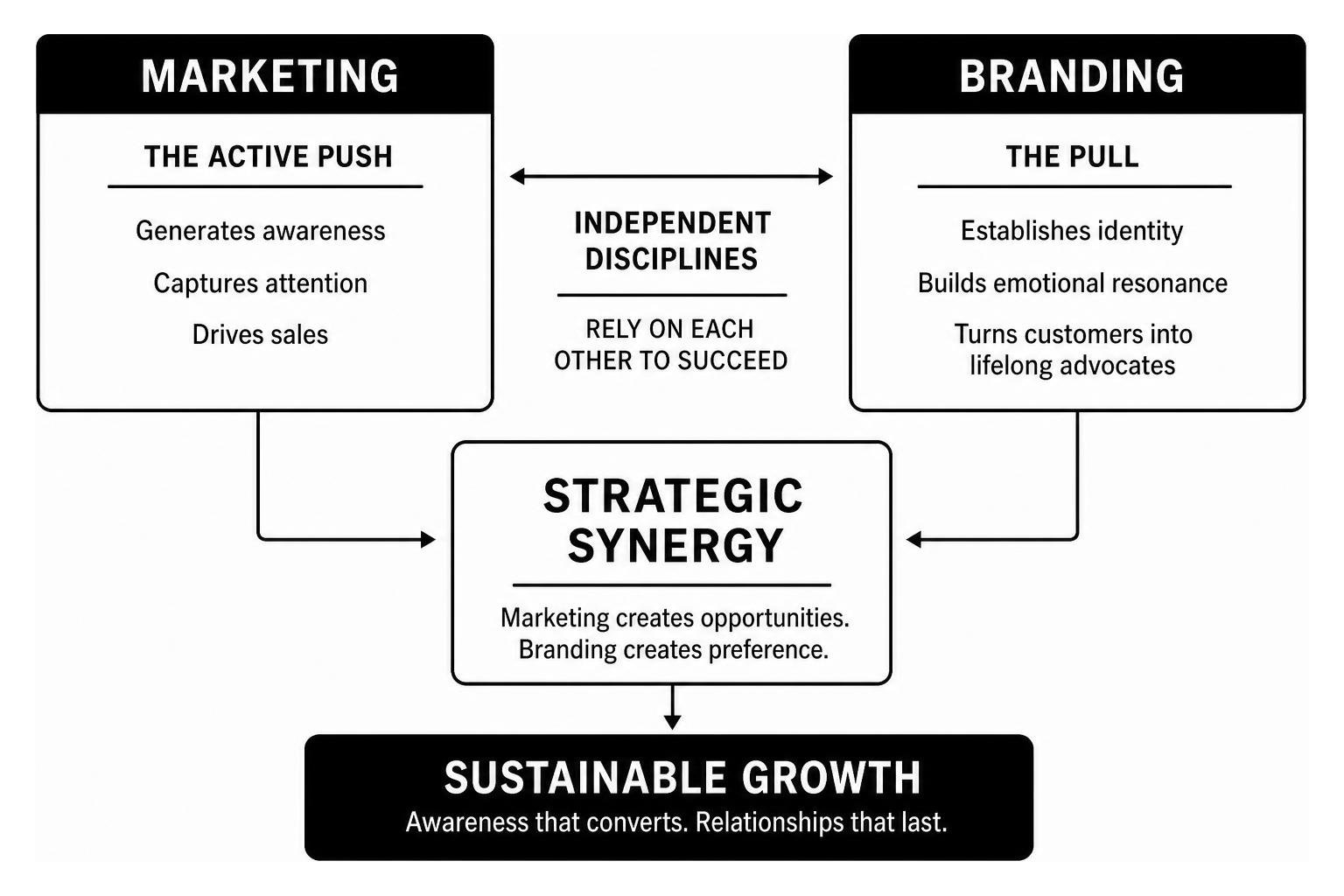
Understanding how customers find, perceive, and stick with your business is the cornerstone of sustainable growth. While the terms are often used interchangeably in boardrooms and casual conversations, marketing and branding represent two distinct disciplines that rely on each other to succeed. Marketing is the active push that generates awareness, captures attention, and drives sales. Branding is the pull that establishes your company's identity, builds emotional resonance, and turns one-time purchasers into lifelong advocates.
To build an organization that thrives over time, leadership teams must master both functions. Below, we break down how these two strategic pillars operate independently, how they unite to form an unstoppable growth engine, and how modern organizations leverage technology, design, and storytelling to dominate their categories.
Marketing & Branding: The Core Differences and Interdependence
To master commercial growth, you must understand where marketing ends and branding begins. Marketing encompasses the tactical processes and tools you use to promote, sell, and distribute your offerings. It relies on market research, target persona development, promotional channels, dynamic pricing, and direct-response tactics. Branding, on the other hand, is the strategic soul of your organization. It includes your mission, values, visual identity, and the overarching reputation you cultivate in the minds of your audience.
Think of marketing as the operational engine and structural skeleton of your go-to-market efforts, while branding is the emotional core and personality that breathes life into every interaction. A company with aggressive marketing but no branding is simply shouting features and discounts into a crowded room. A business with a gorgeous brand identity but no marketing strategy remains a hidden gem that nobody ever discovers.
| Strategic Element | Marketing Focus | Branding Focus |
|---|---|---|
| Core Objective | Generate demand, capture qualified leads, and drive conversions | Build long-term equity, cultivate loyalty, and shape perception |
| Primary Horizon | Short-to-medium term (campaigns, quarters, fiscal years) | Long-term (enduring reputation, lasting enterprise value) |
| Tactical Execution | Paid media, email workflows, SEO, promotional events, sales pipelines | Visual guidelines, messaging frameworks, brand ethos, design systems |
| Key Questions | How do we reach buyers and inspire action today? | Who are we, why do we matter, and why should buyers care? |
| Customer Relationship | Transactional activation and immediate engagement | Emotional connection, perceived value, and enduring trust |
| Strategic Foundation | Direct-response funnels, distribution networks, tactical campaigns | Corporate Brand Strategy, positioning statements, brand voice |
The Structural Role of Marketing in Driving Conversions
Marketing is your operational vehicle for customer acquisition. It takes your value proposition and places it in front of high-intent buyers through carefully orchestrated channels. Whether utilizing search engine marketing, targeted social advertising, event sponsorships, or content distribution, marketing focuses on moving prospects through defined stages of awareness, consideration, and decision.
Modern marketing relies heavily on tactical precision. By deploying sophisticated funnels detailed in our Marketing Automation Services Guide 2026, businesses can systematically qualify leads, nurture prospects based on digital behavior, and accelerate the sales cycle. When executed properly, marketing ensures a continuous flow of revenue, providing the cash flow necessary to fund innovation and long-term expansion.
The Strategic Soul of Branding for Long-Term Equity
While marketing drives transactions, branding builds enterprise value. Branding determines how people feel when they interact with your business, the premium they are willing to pay for your products, and whether they recommend your services to their peers. It creates an intangible asset—brand equity—that protects your business against commoditization, pricing wars, and market volatility.
A comprehensive brand strategy establishes the guardrails for everything your organization says and does. Through dedicated Brand Development Consulting, companies define their distinct positioning, unique point of view, and internal cultural standards. As outlined in our Brand Identity Consulting Guide 2026, your visual and verbal identity creates immediate cognitive shorthand in the marketplace, making your business instantly recognizable across every digital and physical touchpoint.
How Strategic Branding Elevates Marketing Performance
When marketing campaigns are supported by a clear, robust brand identity, their return on investment multiplies. Strong branding lowers customer acquisition costs because high brand recall and positive sentiment increase ad click-through rates, improve conversion percentages on landing pages, and elevate organic search traffic.
Industry leaders like Katerina Chernyavska emphasize that blending behavioral science with cross-platform visual frameworks ensures brand consistency across every digital channel. By creating a harmonious visual and verbal language, businesses reduce user friction, accelerate brand recognition, and turn cold traffic into receptive audiences.
Building High-Impact Brand Identity Systems
A brand identity system is much more than a logo and a color scheme. It is an end-to-end framework that governs typography, iconography, voice, tone, and digital interaction standards. Developing bespoke Brand Elements Design ensures that whether a customer encounters your firm on social media, visits your corporate website, or reads an executive white paper, the experience feels cohesive and professional.
When organizations actively work to Improve Brand Perception, they establish an emotional anchor with their target audience. Committing to Comprehensive Brand Development allows you to map every step of the customer journey, ensuring that your core values and visual aesthetics reinforce credibility from the first touchpoint to post-purchase support.
Empowering Startups to Compete with Enterprise Brands
Startups and mid-market firms often assume they cannot compete with industry giants possessing multi-million-dollar marketing budgets. However, agile branding serves as the ultimate market equalizer. While larger competitors are often slowed down by bureaucratic approvals and generic messaging, emerging businesses can establish sharp, opinionated, and highly differentiated brand identities.
By focusing on a distinct niche, embracing transparent founder storytelling, and maintaining meticulous visual and verbal consistency across their platforms, challenger brands build deep community loyalty. When an audience genuinely believes in a company's mission and personality, that business can outperform larger competitors without needing to match their advertising spend dollar for dollar.
Modern Tactics: Personalization, AI, and Cultural Resonance
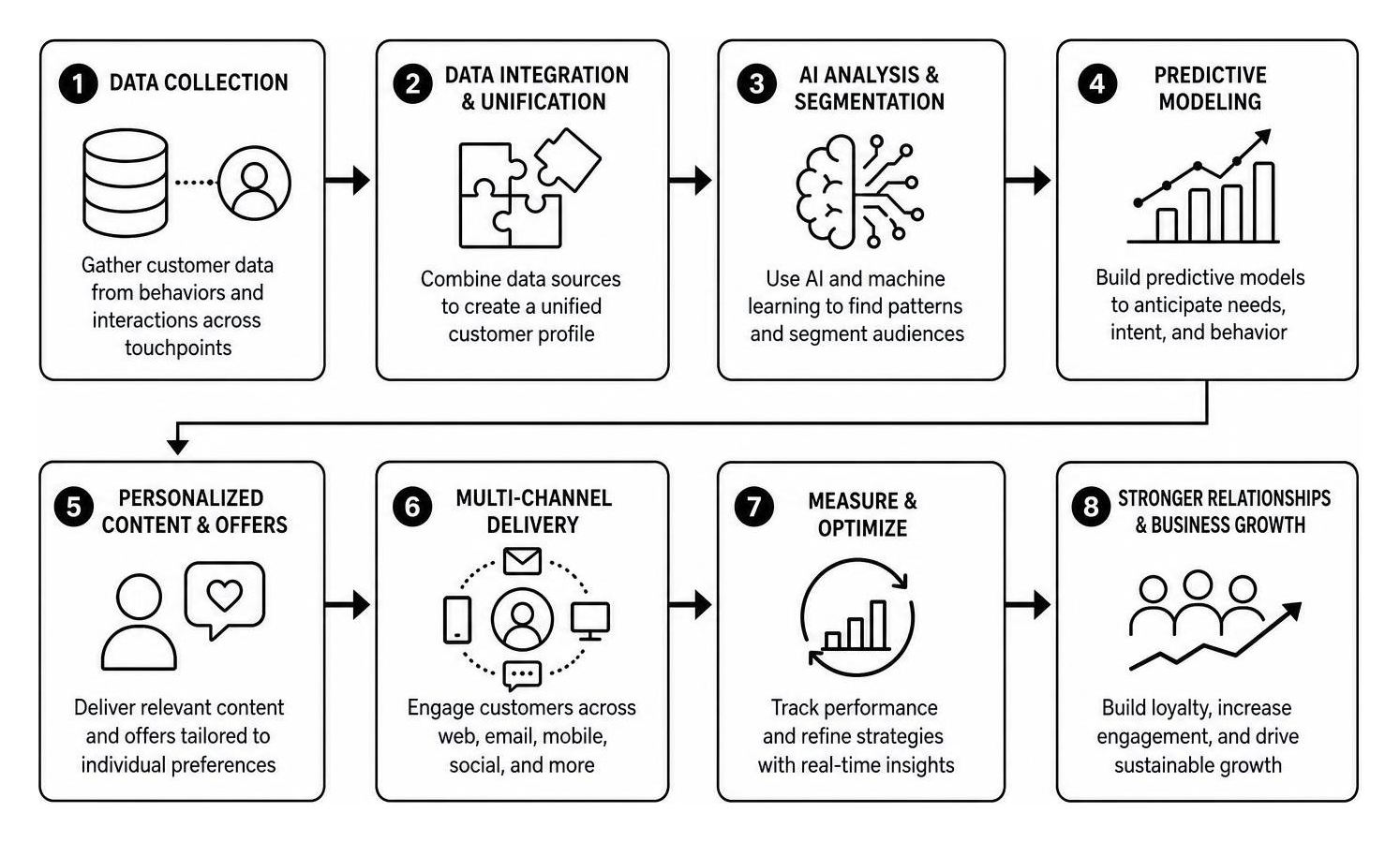
The intersection of technology and consumer expectations has fundamentally altered how marketing and branding operate. Consumers no longer respond to generic, one-size-fits-all messaging. Instead, they expect brand interactions to be tailored to their specific behaviors, needs, and preferences.
Achieving this level of resonance requires a harmonious balance of data science and creative storytelling. As highlighted in The New Era of Brand Authority: How Businesses Win in 2026 and Beyond, modern authority is built by combining predictive technologies with authentic brand humanization. A notable example is Starbucks, which partnered with Boston Consulting Group (BCG) to deploy predictive analytics and machine learning for individual customer recommendations—a move that resulted in a remarkable 150% increase in user interaction.
How AI and Automation Shape Modern Marketing & Branding
Artificial intelligence and advanced automation allow organizations to scale personalized experiences without sacrificing human connection. However, successful leaders recognize that technology must serve the brand vision, rather than dictating it. Adopting an AI-first approach without a defined brand identity often leads to generic, commoditized messaging that dilutes market differentiation.
By prioritizing brand-first strategy, companies leverage Marketing Automation Integration to deploy machine learning models that amplify their unique strengths. Creative leaders such as Liz Selby demonstrate that cross-functional alignment—bringing together marketing, product, and creative strategy under a shared vision—enables organizations to utilize cutting-edge tools to build deeper cultural relevance rather than generic campaign noise.
Real-World Execution: Lessons from Global Category Leaders
Examining how top-tier enterprises execute integrated marketing and branding provides a clear blueprint for success:
- Apple TV+: Rather than simply promoting tune-in times for television programming, Apple creates immersive cultural events. The campaign for Severance Season 2, led by top creative strategists, featured an interactive installation at Grand Central Station. The activation transformed the release into a global cultural phenomenon, driving a major influx of new platform subscribers, making the show Apple TV+'s most-watched series of all time, and earning a prestigious Grand Clio award.
- Netflix: Through the creation of "Tudum," a direct-to-consumer digital destination dedicated to backstage content and fan communities, Netflix elevated its brand from a functional streaming utility into a vibrant cultural hub.
- Etihad Airways: By pioneering immersive virtual reality experiences showcasing their flagship aircraft cabins, Etihad blended high-tech digital marketing with premium luxury branding to engage international travelers across dozens of global markets.
These case studies show that top performers don't just run ads; they build cultural moments. As detailed in our guide on Visibility Is Your Growth Engine: How to Become Unignorable Online, sustained market leadership requires pairing broad marketing visibility with unforgettable brand experiences.
Measuring Business Impact: Marketing KPIs vs. Brand Equity

To evaluate your commercial investments accurately, you must track both quantitative marketing metrics and qualitative brand equity indicators. Conflating the two leads to inaccurate performance assessments and misallocated budgets.
Marketing metrics reflect direct, immediate responses to specific tactical campaigns. Brand metrics, on the other hand, reflect long-term reputation, market authority, and customer sentiment. Conducting regular Brand Perception Analysis allows leadership teams to evaluate how the market truly views their organization, ensuring tactical campaigns do not erode long-term standing.
Common Mistakes When Confusing Marketing & Branding Strategies
When organizations fail to distinguish between marketing and branding, they frequently make strategic errors that hinder growth:
- Short-Term Campaign Bias: Pouring 100% of the budget into direct-response performance ads while ignoring brand storytelling. This leads to rising customer acquisition costs and extreme vulnerability when ad spend stops.
- Siloed Execution: Allowing performance marketing teams to write ad copy that contradicts the company's established brand voice in an attempt to capture cheap clicks.
- Identity Dilution: Changing logos, visual guidelines, or core messaging every quarter to chase ephemeral social media trends, resulting in marketplace confusion.
- Ineffective Content Strategies: Producing purely self-promotional sales material rather than investing in Content Marketing for Brand Awareness that educates, inspires, and builds genuine authority.
Essential Metrics for Attribution and Brand Health
A balanced executive dashboard tracks both immediate campaign efficiency and long-term brand strength:
Direct Marketing Performance KPIs:
- Customer Acquisition Cost (CAC)
- Click-Through Rate (CTR) and Conversion Rate (CVR)
- Cost Per Lead (CPL) and Pipeline Velocity
- Return on Ad Spend (ROAS)
- Funnel stage drop-offs within your Inbound Marketing Automation Funnel
Long-Term Brand Equity KPIs:
- Branded Organic Search Volume (people typing your exact name into search engines)
- Net Promoter Score (NPS) and Customer Satisfaction (CSAT)
- Customer Lifetime Value (LTV) and Multi-Year Retention Rates
- Brand Sentiment across earned media and social conversations
- Pricing Power (the ability to raise prices without experiencing significant customer churn)
Frequently Asked Questions About Marketing and Branding
Should a business invest in branding or marketing first?
Branding must always establish the foundation before aggressive marketing spend begins. Before driving traffic and spending capital on customer acquisition, you must define your target audience, core values, competitive positioning, and visual identity. Once that foundation is secure, marketing campaigns can amplify that identity efficiently without wasting resources on mismatched messaging.
How do marketing automation and CRM tools support branding?
Marketing automation systems and customer relationship management platforms allow you to deliver a consistent, personalized brand experience across every stage of the buyer journey. By exploring our CRM Marketing Automation Integration Guide, organizations learn how behavioral data can trigger timely, beautifully branded communications that nurture prospects and reinforce trust over time.
What is the biggest risk of running marketing without clear branding?
The greatest risk is price commoditization and severe ad spend waste. Without distinct branding, your product or service is viewed as an interchangeable commodity. This forces you to compete purely on price, creates high customer churn, and leaves your business vulnerable to any competitor willing to outspend you on performance advertising.
Conclusion
Marketing and branding are not competing methodologies—they are collaborative disciplines that drive commercial excellence when aligned. Marketing gives your business the reach, visibility, and pipeline velocity needed to win today's market. Branding provides the identity, emotional resonance, and enduring trust required to dominate your category tomorrow.
At Onyx Elite Consulting, we help ambitious organizations unite strategic vision with operational execution. Based in West Hartford, Connecticut, our award-winning consulting practice partners with leadership teams to design differentiated brand identities, build scalable marketing engines, and achieve sustainable growth.
To explore how we can elevate your market position and operational performance, explore our Services Overview today.