
The Building Blocks of Brilliance: Unpacking Brand Elements
Why Brand Elements Design Is the Foundation of Your Business Identity

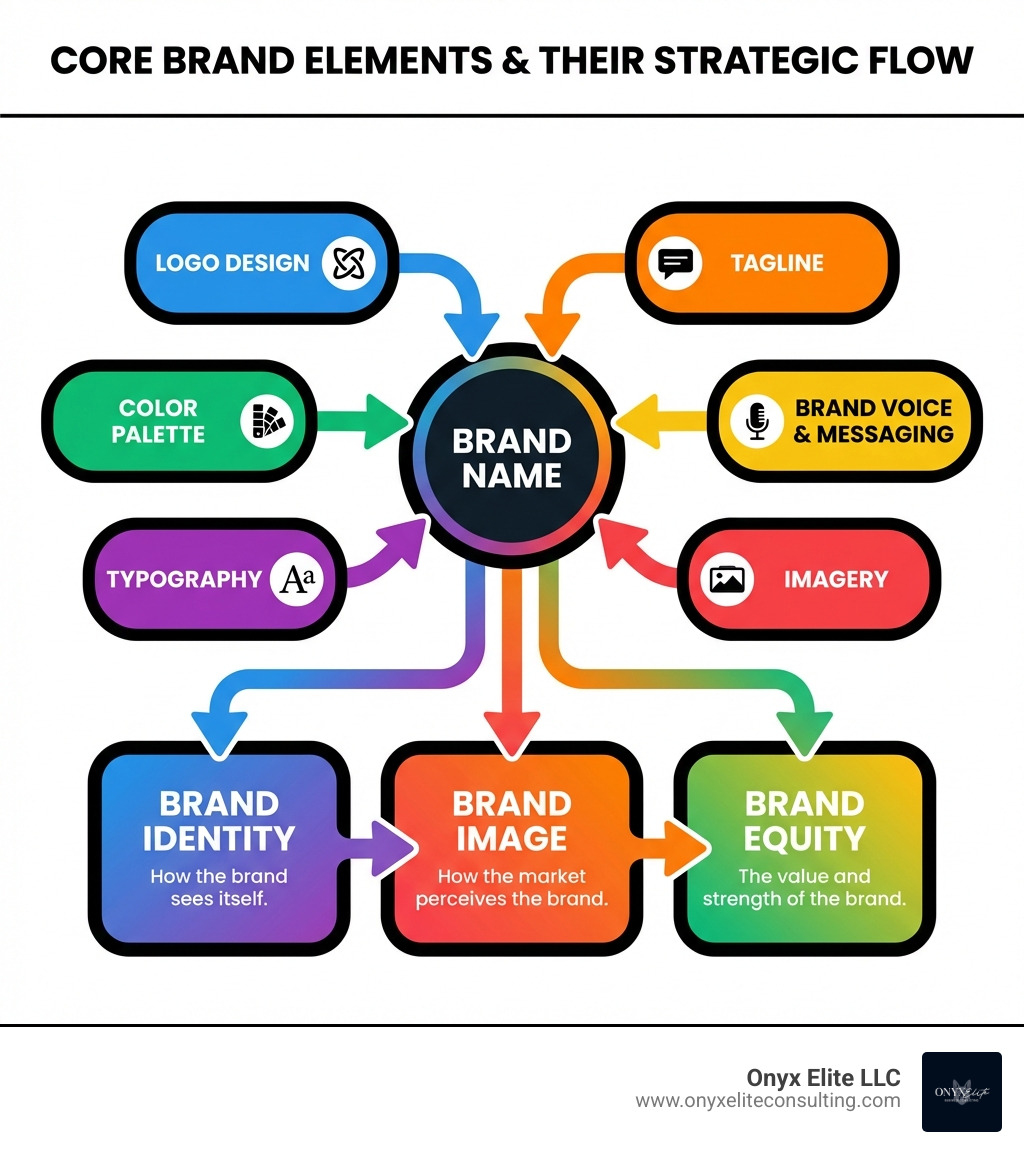
Brand elements design is the strategic creation of tangible visual and verbal components that define how the world recognizes and remembers your business. These elements include your logo, color palette, typography, tagline, tone of voice, and imagery—each working together to form a cohesive identity that shapes customer perception and drives business value.
Core brand elements include:
- Brand Name - Your primary identifier and often the first touchpoint with customers
- Logo - The visual symbol that represents your entire brand
- Color Palette - Strategic use of colors that evoke specific emotions and associations
- Typography - Font choices that convey personality and ensure consistency
- Tagline/Slogan - A memorable phrase that captures your brand's essence
- Brand Voice - The consistent tone and style of all communications
- Imagery & Graphics - Visual elements that reinforce your message and values
According to the American Marketing Association, brand identity refers to the “visual and symbolic elements that represent a brand.” These elements aren't just aesthetic choices—they're strategic assets. Research from Akeneo shows that 52% of consumers are willing to pay more for products that communicate their company’s brand values, with 82% willing to spend up to 30% more. Additionally, 64% of respondents said branded materials positively influenced their view of a business, and a striking 75% of Gen-Z respondents said it increased their trust.
Yet many business leaders struggle with inconsistent branding, unclear messaging, and visual identities that fail to differentiate them in crowded markets. Without a systematic approach to brand elements design, companies risk becoming forgettable—or worse, sending mixed signals that confuse potential customers and erode trust.
Brand identity is what you want people to see. Brand image is what they actually perceive. The gap between these two determines whether your business builds loyalty and commands premium pricing, or gets lost in the noise.
The challenge isn't just creating beautiful designs—it's building a strategic system where every element works together to communicate your unique value, connect emotionally with your audience, and drive measurable business results. From choosing the right colors (blue dominates 40% of Fortune 500 logos) to crafting a tone of voice that resonates, each decision must be intentional and aligned with your overall business strategy.
As entrepreneur and author Seth Godin defines it, “A brand is the set of expectations, memories, stories, and relationships that, taken together, account for a consumer’s decision to choose one product or service over another.” Your brand elements are the tools that create those expectations and tell those stories.
I'm Doru Angelo, Founder & CEO of Onyx Elite LLC, and over the past decade, I've guided businesses through comprehensive brand changes, helping them develop strategic brand elements design systems that drive sustainable growth. Through my work in business consulting and my book The Brilliance of Branding, I've seen how a well-crafted brand identity becomes a powerful asset that influences buying decisions, builds customer loyalty, and creates lasting competitive advantage.
In this guide, we'll unpack the building blocks of effective brand elements design—from the visual toolkit of logos, colors, and typography to the verbal identity that shapes your voice and messaging. You'll learn the systematic process for creating high-impact brand elements, understand the difference between brand identity and brand image, and find best practices for designing elements that are simple, memorable, and strategically aligned with your business goals.
The Core Components: What Are Brand Elements?
At its heart, brand elements design is about creating a comprehensive language for your business. This language isn't just spoken; it's seen, felt, and heard. It encompasses everything from the literal words you use to the visual cues that instantly identify you. These elements are the tangible aspects of a brand that customers encounter, differentiating you from others and forming a recognizable identity. They are, as the American Marketing Association states, the "visual and symbolic elements that represent a brand."
This cohesive "visual language" ensures that every interaction a customer has with your brand reinforces its core message and values. When these elements are thoughtfully designed and consistently applied, they create a powerful, unified presence that resonates with your audience. For more insights into how we develop these foundational components, you can explore our Services Overview.
The Visual Toolkit: Logos, Colors, and Typography
The visual elements are often the first point of contact, making an impression in a matter of seconds. These are the aspects that catch the eye and embed your brand into the consumer's memory.
Logos: Your logo is arguably the most recognizable aspect of your brand's identity—a visual shortcut that is meant to be memorable. Logos are carefully thought out, designed, and refined to instantly call to mind your organization and its core emotional appeal. There are several types of logos, each serving distinct branding purposes:
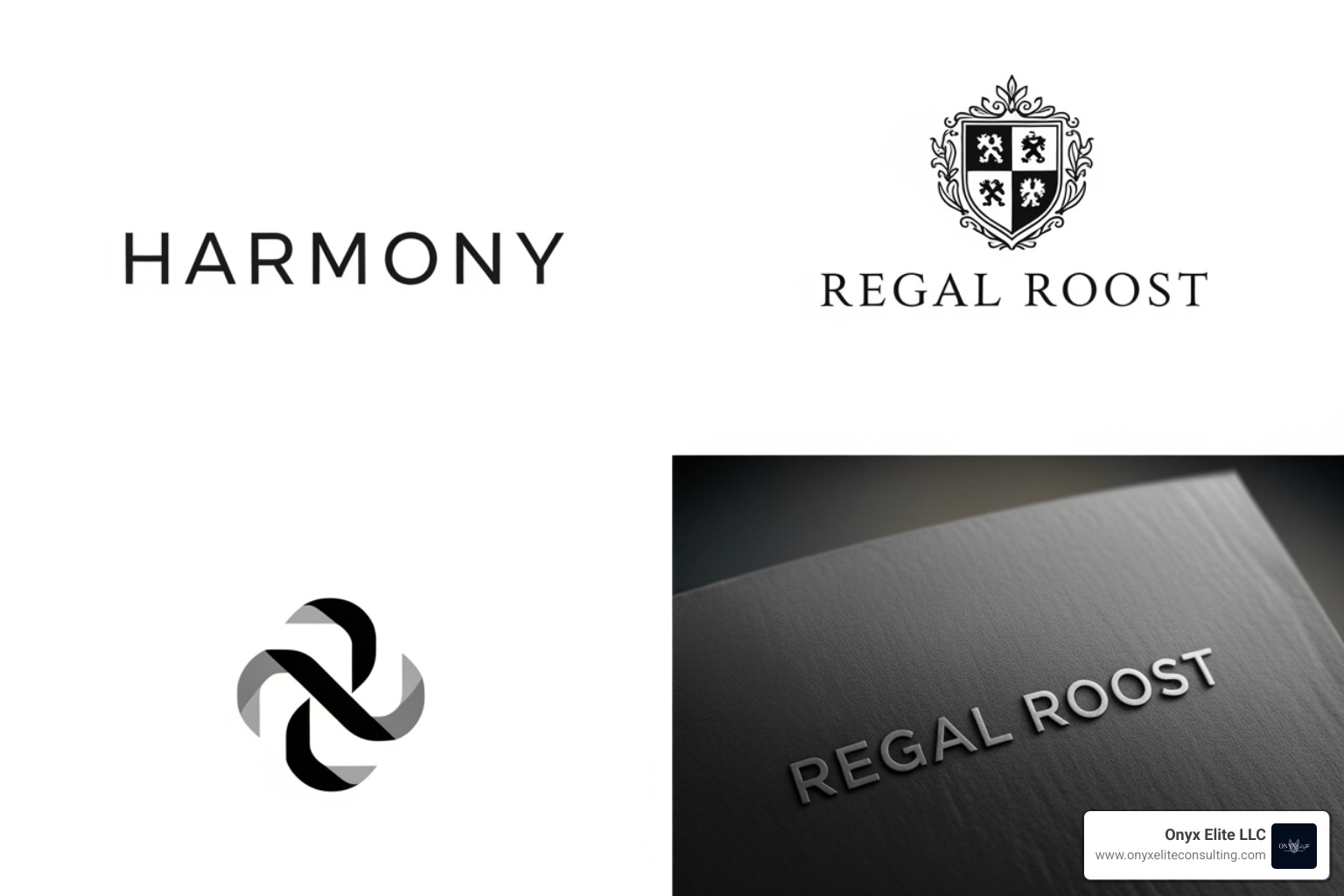
- Wordmarks (Logotypes): These use a company’s full name in a signature font and brand colors, like "Jeep" or "Barbie." They are simple, direct, and effective for clear, concise names.
- Letterforms: Featuring a single letter as the central design element, often the first letter of a company’s name (e.g., "Figma").
- Lettermarks (Monograms): Built around brand name abbreviations, these always feature more than one letter (e.g., "IBM," "CNN"). They're great for long company names.
- Brand Marks (Pictorial Marks): These are graphic symbols or icons that clearly represent a company or its values (e.g., Apple's apple, Shell's shell).
- Abstract Logo Marks: Simple, memorable, and scalable, these use abstract geometric forms to represent the brand (e.g., Dropbox, Airbnb).
- Mascots: Character-based logos that embody the brand's personality, often with a backstory (e.g., Mr. Clean, the Michelin Man).
- Emblems: Logos where the company name is tightly integrated into a symbol or icon, often conveying tradition and trustworthiness (e.g., Starbucks, BMW).
- Combination Marks: These combine a wordmark with a pictorial mark, abstract mark, or mascot, offering versatility (e.g., Taco Bell, Adobe).
- Dynamic Marks: Flexible designs that change across subdivisions or products while preserving a core element (e.g., NBC's peacock variations).
You can dive deeper into the creation process with a resource like Designing a Logo for Your Brand: A Step-by-Step Tutorial.
Color Palette: Colors are powerful communicators, evoking specific feelings and associations. A well-defined color palette sets the mood, signals intent, and makes your brand instantly recognizable. For instance, blue is a leader in logo design, appearing in 40% of Fortune 500 companies' logos, often associated with trust and stability. Black follows with 25%, and red with 16%. However, it's not just about popularity; it's about psychology. Adobe recommends avoiding yellow-green shades due to their association with toxicity and jealousy, while green itself is linked to nature, health, and innovation. The right selection helps differentiate your brand and trigger desired customer responses. More about color psychology can be found at Color Meanings.
Typography: Your font choices convey your brand's visual voice and tone before a single word is read. Whether neat, bold, or playful, typography shows up everywhere—emails, presentations, contracts, business cards—making it a crucial element of corporate identity. Consistent use of typography sets a clear tone and reinforces brand attributes. A great example of this is IBM Plex, IBM’s custom typeface, designed to feel both professional and human, supporting their mission of tech leadership grounded in trust.
Imagery and Graphic Elements: Beyond logos, colors, and fonts, the style of your photography, illustrations, icons, and graphic patterns plays a vital role. These elements should align seamlessly with your brand's overall message and values, creating a cohesive visual narrative. Whether it's the clean, minimalist photography of a tech brand or the playful illustrations of a consumer product, consistency in imagery reinforces your brand's personality and helps customers connect with your story.
The Verbal & Conceptual Identity
While visuals grab attention, your verbal and conceptual identity solidifies your brand's personality and message. These elements tell your story, define your voice, and create an emotional connection.
Brand Name: Your brand name is a critical foundation, often the first and most direct way a consumer interacts with your business. It should be distinctive, easy to remember, pronounce, and resonate with your target audience, conveying your essence and values. Alongside your logo, your name is one of the two most important components of your brand identity, introducing your company to the world.
Taglines and Slogans: These are short, memorable phrases that encapsulate your brand's philosophy or mission. Acting as a "verbal logo," a well-written tagline quickly communicates your purpose or benefit, creating strong emotional connections and making your brand instantly recognizable. Think of iconic taglines that immediately bring a brand to mind—they're powerful because they distill complex ideas into simple, impactful statements.
Tone of Voice and Messaging: How your brand communicates—its unique tone of voice—is just as important as what it says. Whether formal, witty, empathetic, or authoritative, your tone should consistently reflect your company's personality and values. This consistency helps people recognize your brand not just by its look, but by how it "sounds." Messaging needs to adapt to different formats (e.g., a press release versus a social media post) without losing its core voice, ensuring that every communication feels like it’s coming from the same brand. This consistency builds trust and helps customers form a deeper relationship with your business.
Brand Personality and Story: Your brand's personality refers to the human characteristics attributed to it, making it relatable and unique. Is your brand an innovator, a friend, a mentor, or a rebel? This personality, woven into your brand story, helps customers understand who you are beyond your products or services. As Seth Godin eloquently puts it, "A brand is the set of expectations, memories, stories, and relationships that, taken together, account for a consumer's decision to choose one product or service over another." Your brand story provides the narrative framework for these memories and relationships.
Identity, Image, and Equity: The Strategic Framework
Understanding the relationship between brand identity, brand image, and brand equity is crucial for any business aiming for long-term success. These three concepts, while distinct, are deeply intertwined and collectively shape how your brand is perceived and valued.
Brand identity is your internal blueprint—it's how you want your business to be perceived. It's the sum of all the intentional choices you make in brand elements design: your logo, colors, fonts, name, tagline, and tone of voice. This is what you create and control.
Brand image, on the other hand, is the external reality—it's how your audience actually perceives your brand. This perception is formed through every interaction they have with your business, influenced by your identity, their experiences, word-of-mouth, and even competitor actions. While you strive to align your image with your identity, the image is ultimately shaped by the consumer and not directly controlled by you. A strong identity aims to cultivate a specific image in customers' minds, but the true image emerges from their collective interpretation.
Brand equity is the accumulated value a brand holds in the marketplace, often a direct result of a well-managed identity and a positive image. It's the premium customers are willing to pay, the loyalty they exhibit, and the overall positive associations they have with your brand. High brand equity translates into competitive advantage, increased market share, and greater financial value. The Akeneo study on consumer behavior found that 52% of respondents were willing to pay more for products that communicate their company's brand values, with 82% willing to spend up to 30% more. This willingness to pay is a tangible demonstration of brand equity in action.
The interplay is dynamic: a strong brand elements design creates a clear identity, which helps shape a positive brand image, ultimately building valuable brand equity. Conversely, a weak identity can lead to a confused image and erode equity.
| Feature | Brand Identity | Brand Image | Brand Equity |
|---|---|---|---|
| Perspective | Internal (what the brand wants to be) | External (what consumers perceive the brand to be) | Financial/Perceptual value of the brand |
| Control | Controlled by the business | Not directly controlled by the business | Influenced by both identity and image |
| Components | Logo, colors, typography, name, tagline, voice | Consumer perceptions, associations, experiences | Customer loyalty, awareness, perceived quality |
| Objective | To represent vision, values, and personality | To foster positive associations and loyalty | To build competitive advantage and financial value |
| Analogy | Your carefully chosen outfit and demeanor | How others react to and describe your outfit | Your overall reputation and social standing |
The Systematic Process for High-Impact Brand Elements Design
Creating a high-impact brand identity is not a random act of creativity; it's a systematic process that blends strategic thinking with artistic execution. It's about translating your business's core purpose into a cohesive and compelling presence. The journey involves understanding your brand's essence, analyzing the competitive landscape, defining a clear strategy, crafting distinct visuals, and establishing guidelines for consistent application.
This systematic approach ensures that every aspect of your brand elements design is intentional and aligned with your business objectives. For a deeper dive into the strategic underpinnings, we recommend exploring our Ultimate Guide to Brand Strategy.
Step 1: Strategy and Positioning
Before any design work begins, we must lay a solid strategic foundation. This involves deep introspection and thorough external analysis.
- Market Research and Competitor Analysis: We start by understanding the landscape. What are the current market trends in West Hartford, CT, and across Connecticut? Who are your competitors, and what do their brands communicate? Analyzing their strengths and weaknesses helps us identify opportunities for differentiation and ensures your brand stands out, rather than blending in.
- Target Audience and Buyer Personas: Who are you trying to reach? We create detailed buyer personas, understanding their demographics, psychographics, needs, pain points, and aspirations. This ensures that your brand elements resonate deeply with the people who matter most.
- Defining Mission, Values, and Brand Personality: What is your business's core purpose? What principles guide your operations? And if your brand were a person, what would its personality traits be? (e.g., innovative, trustworthy, playful, sophisticated). These answers form the emotional core of your brand.
- Brand Positioning and Unique Selling Proposition (USP): How will your brand be positioned in the market? What makes you uniquely valuable to your target audience? Clearly outlining your positioning and USP guides all subsequent design and messaging decisions, ensuring your brand communicates why customers should choose you.
This strategic groundwork is paramount. It ensures that your brand elements design isn't just aesthetically pleasing, but strategically powerful. For more insights on strategic development, we invite you to read our Blogs & Insights.
Step 2: The Creative Process for brand elements design
With a clear strategy in hand, we move into the exciting phase of crafting the visual and verbal elements that bring your brand to life. This is where artistic vision meets strategic intent.
- Crafting Visual Elements:
- Logo Design Principles: Effective logos adhere to core principles: simplicity, memorability, versatility, and appropriateness. They should be clear, straight to the point, and easily recognizable at any size or context.
- Balance: Whether symmetrical or asymmetrical, a logo needs visual balance to feel stable and professional.
- Simple Layout: Avoid overly complex backgrounds or unnecessary elements. Simplicity is key for instant recognition and avoids overwhelming customers.
- Limited Color Palette: Aim for no more than three colors. This prevents confusion and ensures consistency across all applications.
- Eye-Catching and Memorable: A great logo stands out from the competition and is easy for people to recall.
- Sans-serif Fonts: Increasingly popular in modern design for their readability and scalability, especially in digital contexts. Serif fonts can sometimes become messy when resized.
- Basic Geometry: Using fundamental shapes often makes logos more versatile and easier to optimize.
- Negative Space: Clever use of negative space can add depth, visual interest, and even hidden meanings to a logo.
- Lowercase: A trend often used to convey a modern, friendly, and approachable tone.
- Color Palette Selection: Based on your brand personality and target audience, we select colors that evoke the right emotions. For example, blue often conveys trust, black sophistication, and red energy. We test these palettes on various assets to ensure they perform well and align with your brand's story.
- Typography Hierarchy: We choose primary and secondary fonts that complement each other and reinforce your brand's voice. For instance, IBM Plex is an excellent example of a custom typeface designed to convey both professionalism and humanity, perfectly aligning with IBM's brand.
- Imagery Style: We define a consistent style for all visual assets—photography, illustrations, icons—that aligns with your brand's tone and message. This might mean a preference for candid shots, minimalist graphics, or vibrant, expressive illustrations.
Step 3: Codifying and Evolving Your Brand
Once your brand elements are designed, the next crucial step is to ensure their consistent application and allow for future evolution.
- Brand Guidelines and Style Guides: These are essential documents that codify the rules for using your brand elements. They specify everything from logo usage (clear space, minimum size), color codes (CMYK, RGB, Hex), typography hierarchy, imagery direction, and even your brand's tone of voice. A good set of guidelines makes it easy for anyone—from internal teams to external partners—to keep everything aligned, building recognition and trust. Without them, even the most brilliant brand elements design can become diluted and inconsistent over time.
- Consistency Across All Brand Touchpoints: Consistency is the bedrock of strong branding. Your brand elements must be applied uniformly across all platforms: your website, social media, marketing materials, packaging, signage, and internal communications. This constant, unified presence builds familiarity and reinforces your brand's message.
- Brand Evolution and Rebranding: A brand's visual identity is not static; it's a living thing that should evolve with your company. As your business grows, adapts to new markets, or shifts its focus, your brand elements may need refinement. Even 100-year-old brands like Lufthansa refresh their branding to maintain visual appeal and relevance. This isn't about abandoning your core values, but about ensuring your identity remains fresh, modern, and aligned with your current strategic objectives.
Key Considerations and Career Paths in Branding
Effective brand elements design goes beyond aesthetics; it digs into psychology, steers legal complexities, and requires a specific skill set. At Onyx Elite LLC, we pride ourselves on a comprehensive approach that integrates these critical considerations. We invite you to explore our Branding Portfolio to see how we apply these principles.
Best Practices and Psychological Impact
Designing effective and memorable brand identities involves adhering to best practices and leveraging the power of human psychology.
- Simplicity: Simple designs are often the most memorable and versatile. An overly complex logo or a cluttered color scheme can confuse customers and dilute your message. Limiting your color palette, for instance, prevents visual noise and ensures clarity.
- Memorability: Your brand elements should be easy to recall. This often comes from unique design, clear messaging, and consistent exposure.
- Versatility: Brand elements must work across diverse applications—from a tiny app icon to a large billboard. They should be effective in various sizes, colors, and contexts.
- Emotional Design and Color Psychology: Colors have a profound psychological impact. Blue is widely associated with trust and stability, making it a popular choice for financial institutions and tech companies. Black often conveys sophistication and power, while red signifies energy, passion, or urgency. Green is linked to nature, health, and growth. These associations aren't accidental; they're deeply ingrained in human perception. The psychological impact of color choices in logo design and overall branding is a powerful tool to evoke specific emotions and perceptions. The top 3 colors in modern logo design—blue, black, and red—dominate for these very reasons. Understanding these nuances allows us to design elements that resonate emotionally with your target audience.
Legal, Ethical, and Career Aspects of brand elements design
Beyond creative execution, there are crucial legal, ethical, and professional considerations in brand elements design.
- Legal Protection: Safeguarding your brand elements is paramount. This involves trademarks for your brand name, logo, and slogans, and copyright for original visual and written content. Before finalizing a brand name or logo, search trademark databases in your country or region to ensure your chosen elements aren’t already in use. In the United States, this means checking the USPTO database. This proactive step prevents costly legal disputes down the line.
- Ethical Branding: Developing and using brand elements ethically means maintaining honesty, integrity, and transparency in all branding practices. This includes avoiding deceptive messaging, cultural appropriation in design, or misrepresenting your products or services. Ethical branding builds long-term trust and a positive reputation.
- Career Paths and Skills for Brand Identity Designers: Aspiring brand elements design professionals need a blend of creative talent, technical proficiency, and strategic thinking. Essential skills include graphic design, typography, color theory, and an understanding of marketing principles. Educational paths often involve degrees in graphic design, visual communication, or marketing. Proficiency in design applications like those in Adobe Creative Cloud (e.g., Photoshop, Illustrator, InDesign) is fundamental, as these tools are used across industries for creating logos, visual assets, and brand guidelines. Practical experience, a strong portfolio, and continuous learning are also vital for success in this dynamic field.
Conclusion: Building a Lasting Brand
We've journeyed through the intricate world of brand elements design, from the fundamental visual and verbal components to the strategic framework that differentiates identity from image and builds equity. We've explored the systematic process of creating high-impact brand elements, emphasizing the critical steps of strategy, creative execution, and codification through guidelines. Finally, we touched upon the psychological impact, legal necessities, and the exciting career paths within this field.
Your brand elements are more than just pretty pictures or catchy phrases; they are the strategic assets that define your business, communicate its values, and forge emotional connections with your audience. Consistency across all brand touchpoints is not merely a best practice—it is the cornerstone of building trust and recognition. A well-designed brand identity is a living entity, capable of evolving while remaining true to its core, ensuring lasting relevance and impact.
At Onyx Elite LLC, we understand that building a brilliant brand requires a blend of artistry and strategic acumen. We are passionate about helping businesses in West Hartford, CT, and across Connecticut craft compelling brand elements design systems that drive sustainable growth and operational excellence. If you're ready to transform your brand into a powerful asset, we're here to help.
Contact Us to discuss your brand's future and Explore our comprehensive Services Overview to see how we can partner with you to open up your brand's full potential.