

The Best Sales and Marketing Automation Tools to Warm Up Cold Leads
Why Cold Leads Stay Cold — And What to Do About It

The best lead nurturing automation tools turn cold, forgotten prospects into paying customers — without your team sending a single manual follow-up. Here's a quick look at the top options:
| Tool | Best For | Starting Price |
|---|---|---|
| HubSpot | All-in-one sales & marketing | Free / $15/user/month |
| ActiveCampaign | Behavior-based email automation | $15/month |
| Salesforce | Enterprise CRM + nurturing | $3,600/month |
| Marketo Engage | B2B marketing automation | Custom pricing |
| Zoho CRM | SMB-friendly automation | $14/user/month |
| Pipedrive | Visual pipeline management | $14/month |
| monday CRM | Custom workflow building | $9/seat/month |
Most deals don't die from a hard "no." They fade out because nobody followed up consistently. Research shows that 80% of leads require at least five follow-ups to convert — yet only 8% of salespeople actually follow through that many times. The result? Leads pile up in your CRM, go cold, and eventually get ignored entirely.
The gap between capturing a lead and closing a sale is where revenue goes to die. Manual processes — spreadsheets, copy-paste emails, inconsistent outreach — simply can't keep up with what today's buyers expect. Buyers research independently, move at their own pace, and respond only to messages that feel relevant to them, not generic blasts sent to everyone on a list.
Automation fixes this. Companies that excel at lead nurturing generate 50% more sales-ready leads at 33% lower cost. Nurtured leads also make purchases that are 47% larger on average. The data is clear: systematic, automated nurturing isn't a nice-to-have in 2026 — it's a competitive requirement.
I'm Doru Angelo, Founder & CEO of Onyx Elite LLC, where I've spent over a decade helping businesses build scalable systems and eliminate operational inefficiencies — including helping clients implement the right lead nurturing automation tools to turn inconsistent pipelines into predictable revenue engines. In the sections ahead, I'll walk you through everything you need to choose and deploy the right platform for your business.
Why Your Business Needs Lead Nurturing Automation Tools in 2026
If you’ve ever tried to manually nurture a database of over a thousand leads, you know it’s like trying to shovel a West Hartford driveway during a classic Connecticut nor'easter with a plastic sandbox spoon. It is exhausting, incredibly slow, and by the time you make any real progress, a fresh layer of cold reality has already frozen over your efforts.
In July 2026, relying on manual follow-ups is no longer just inefficient; it is a direct threat to your bottom line. The traditional "speed-to-lead" metric used to mean responding within 24 hours. Today, buyers expect responses in minutes, if not seconds. If a prospect downloads a white paper or requests a quote, and your sales rep doesn't follow up until the next morning, that prospect has already visited three other websites and likely engaged with a competitor who automated their initial touchpoint.
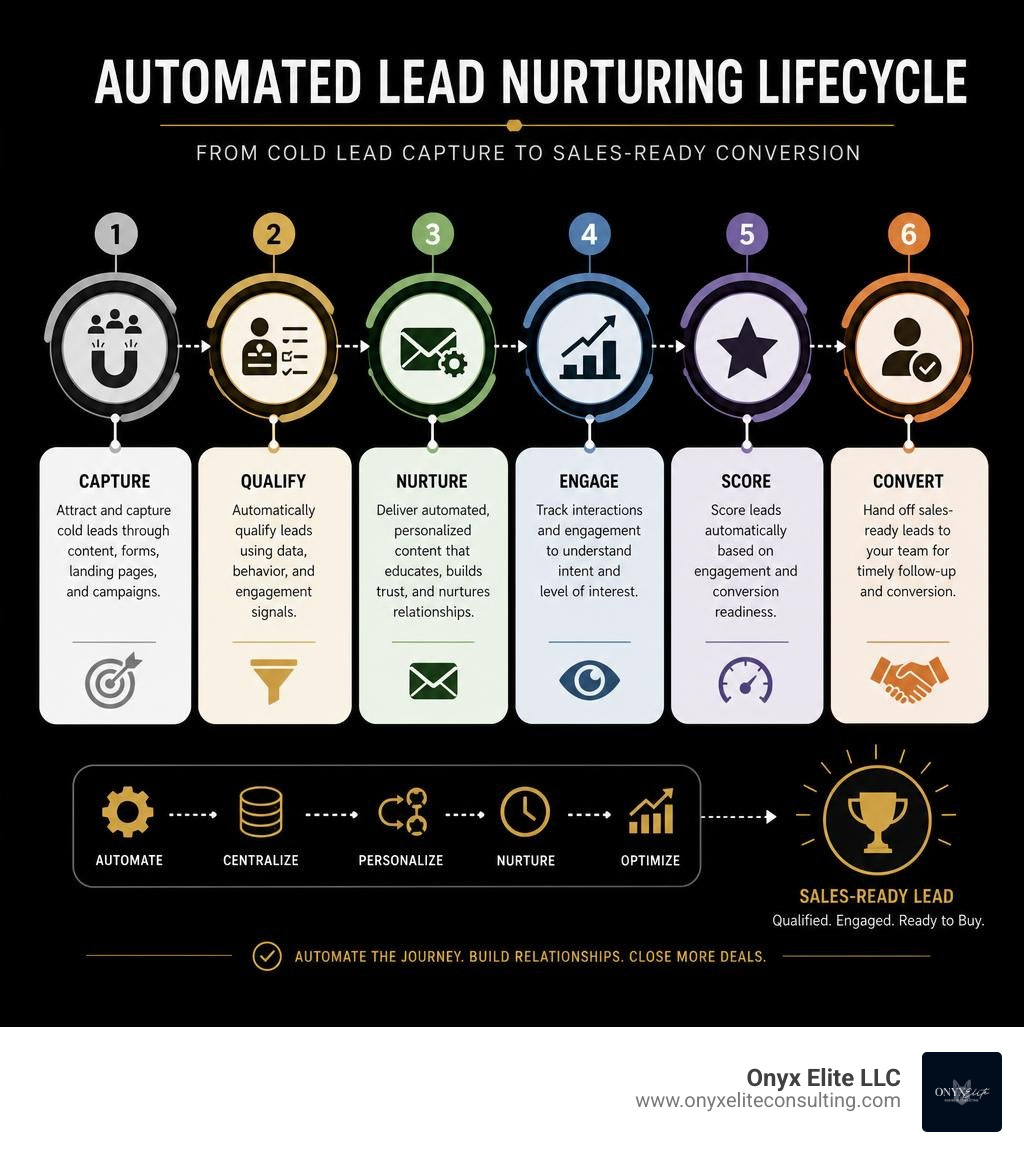
More info about workflow strategies reveals that automating this process transforms how your business interacts with the modern buyer's journey. When you use lead nurturing automation tools, you transition from a reactive model (waiting for a sales rep to find time to write an email) to a proactive model (anticipating customer needs based on real-time data).
Consider how a typical buyer moves through their journey. They don't just read an email and buy. They browse your pricing page, read a blog post, check out your LinkedIn page, and talk to their peers. Automation tools track these digital footprints. Instead of sending a generic "just checking in" email, an automated system can trigger a highly specific case study the moment a prospect from a specific industry visits your pricing page twice in 48 hours. This level of responsiveness keeps your brand top-of-mind without putting an administrative burden on your sales team.
Key Features of Modern Nurturing Platforms
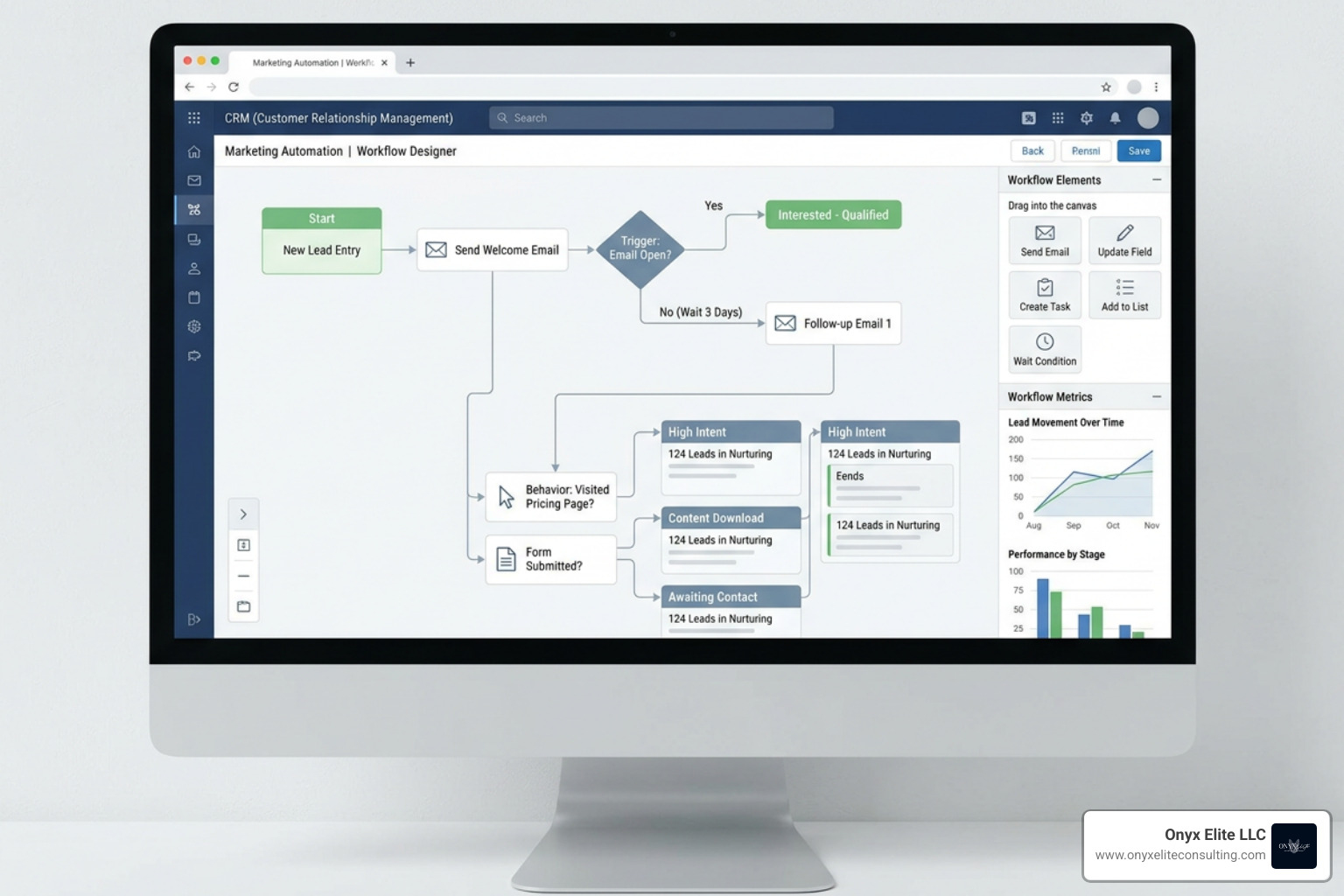
Choosing the right platform can feel overwhelming given the sheer volume of software available in 2026. However, the best lead nurturing automation tools all share a core set of modern features designed to streamline operations and maximize conversion rates.
- Lead Scoring: This feature automatically assigns numerical values to leads based on their interactions with your brand. For example, downloading an eBook might add 5 points to a lead's score, while visiting your pricing page might add 20 points. Once a lead crosses a certain threshold, the system flags them as sales-ready and routes them directly to your sales team. This ensures your reps spend their valuable time talking to warm, qualified prospects rather than chasing cold, inactive contacts.
- Smart Segmentation: Gone are the days of segmenting lists solely by basic demographics. Modern platforms allow you to segment leads dynamically based on behavior, engagement levels, and real-time intent data. If a lead stops opening your emails, they are automatically moved to a "re-engagement" segment. If they start clicking on product-specific links, they transition to a "high-intent" segment.
- Multi-Channel Orchestration: Nurturing is no longer confined to the inbox. The most advanced systems allow you to coordinate campaigns across multiple channels simultaneously. You can trigger an automated email, queue up a targeted LinkedIn ad, and send a personalized SMS message based on a single workflow.
To help you understand how systems are evolving, we must look at the shift from traditional rules-based systems to modern AI-driven or "agentic" nurturing. You can read more about how to integrate systems to see how these tools connect to your broader tech stack.
Below is a comparison of how traditional rules-based workflows differ from modern agentic nurturing systems:
| Feature | Traditional Rules-Based Nurturing | Modern Agentic Nurturing (AI-Powered) |
|---|---|---|
| Workflow Logic | Rigid, pre-determined "if/then" branches. | Dynamic, real-time decision making. |
| Personalization | Uses basic merge tags (First Name, Company). | Analyzes past interactions to draft unique context-aware emails. |
| Trigger Source | Simple actions like form fills or email opens. | Multi-source intent signals, website behavior, and conversation history. |
| Maintenance | High. Requires constant manual updates to branching logic. | Low. The system adjusts its own pathing based on performance data. |
| Channel Flexibility | Mostly limited to sequential email campaigns. | Seamlessly coordinates email, SMS, and ad networks on the fly. |
Essential Features of Lead Nurturing Automation Tools
When evaluating platforms like monday CRM or Oracle Eloqua, there are several non-negotiable features you must look for to ensure long-term scalability.
First, dynamic content is crucial. This technology allows you to alter blocks of content within a single email or landing page based on who is viewing it. If an IT executive opens your email, they see technical specifications and security details. If a CFO opens the exact same email, they see cost-benefit analyses and ROI statistics.
Second, behavioral triggers ensure your messaging is timely. Instead of sending emails on a rigid weekly schedule, behavioral triggers launch messages based on immediate actions, such as a user abandoned-cart event or a trial user completing an onboarding step. Platforms like Encharge.io excel at this, allowing SaaS companies to send hyper-targeted emails based on direct product usage.
Finally, seamless CRM synchronization is the glue that holds your sales and marketing efforts together. Your nurturing tool must sync with your CRM in real-time, ensuring that sales reps have complete visibility into which emails a lead has opened, which pages they've visited, and what their current lead score is. For deeper insights, you can review our best practices for automation to see how to structure these data flows.
How AI Enhances Lead Nurturing Automation Tools
Artificial intelligence has completely transformed the lead nurturing landscape. It has moved us away from generic, robotic-sounding drip campaigns and brought us into an era of hyper-personalized, conversational engagement.
AI-driven platforms analyze vast amounts of historical data to predict which leads are most likely to convert, what time of day they are most likely to open an email, and what specific topics will resonate with them. Tools utilizing agentic nurture, powered by Piper the AI SDR Agent show how businesses can now deploy AI agents that monitor buyer signals and intent fluctuations across accounts to automatically deliver personalized, multi-channel touchpoints.
Furthermore, generative AI can write context-aware email drafts on the fly. Instead of a marketer writing fifty different email variations, the AI analyzes the prospect's LinkedIn profile, their company's recent news, and their past website interactions to draft a highly tailored message. This level of automation allows small teams to execute enterprise-grade campaigns without adding headcount.

Best Practices for Implementing Automated Workflows
Successfully implementing lead nurturing automation tools requires more than just buying a software license and turning on a template. It requires a strategic approach that aligns your team, cleans your data, and maps your content to the buyer's journey.
One of the most common points of failure we see at Onyx Elite LLC is a lack of alignment between sales and marketing teams. Marketing might set up a workflow that flags a lead as "hot" after three blog views, while sales defines a qualified lead as someone who has requested a demo. If these definitions don't match, sales reps will lose trust in the automated system and ignore warm leads. Both teams must sit down and agree on clear, shared lead qualification criteria and establish a service level agreement (SLA) for follow-up times.
Data hygiene is another critical factor. If your CRM is filled with duplicate contacts, outdated email addresses, and incomplete profiles, your automation tools will struggle. We recommend implementing automated data-cleansing tools to continuously scrub your database, verify email deliverability, and enrich contact profiles with firmographic data.
To ensure your systems talk to each other correctly, check out our guide with more info about CRM integration.
Segmenting and Personalizing Campaigns
Effective segmentation is the foundation of personalization. If you send the same generic newsletter to your entire database, your unsubscribe rates will spike, and your deliverability will suffer.
Instead, segment your audience using a combination of firmographics (industry, company size, geographic location) and behavioral tracking. For B2B companies, this is especially important when dealing with complex buying committees. An operations executive, a technical lead, and a purchasing manager all have different concerns. Your automation platform should segment these contacts within the same target account and deliver tailored content to each stakeholder.
For example, you can set up automated flows that deliver a technical white paper to the IT director, while simultaneously serving display retargeting ads highlighting cost savings to the CFO. According to 5 Powerful Lead-Nurturing Automation Strategies You Need, coordinating these multi-channel touchpoints ensures consistent brand messaging across every department of a target account.
For businesses looking to optimize these segmentations and streamline their operations, we offer deeper strategic insights in our guide with more info about process improvement.
Measuring Success and ROI
You cannot manage what you do not measure. To understand the true impact of your lead nurturing automation tools, you must look beyond basic metrics like email open rates and click-through percentages. While those are helpful indicators of engagement, they do not tell you if your campaigns are actually driving revenue.
Instead, focus on high-level business metrics:
- Conversion Rates: Track how quickly leads move from one stage of your sales funnel to the next (e.g., Marketing Qualified Lead to Sales Qualified Lead).
- Pipeline Velocity: Measure the average time it takes for a lead to go from initial contact to a closed sale. Successful lead nurturing should significantly shorten this cycle.
- Revenue Attribution: Use multi-touch attribution models to identify which specific nurturing workflows and content assets contributed to closed-won deals.
If you are using HubSpot as your primary system, you can learn how to set up HubSpot automation to properly track these metrics and build custom reporting dashboards that prove your marketing ROI.
Frequently Asked Questions about Lead Nurturing
What is the difference between lead nurturing and marketing automation?
While these terms are often used interchangeably, they are actually quite different. Marketing automation is the broad technology that streamlines repetitive marketing tasks across various channels (like social media scheduling, tracking website analytics, and managing ad campaigns).
Lead nurturing, on the other hand, is a specific strategy focused on building relationships with prospects who are not yet ready to buy. Lead nurturing uses marketing automation tools to deliver educational, relevant content at the right time, guiding prospects step-by-step through the sales funnel until they are ready to make a purchase.
How many touchpoints are required for effective nurturing?
While there is no single "magic number" that applies to every industry, most research indicates that it takes between 5 to 7 touchpoints to convert a cold lead into a warm sales opportunity.
However, the quality and timing of those touchpoints are far more important than the sheer quantity. Flooding a prospect's inbox with seven generic emails in a single week will only lead to them hitting the unsubscribe button. A well-orchestrated nurturing campaign spaces out touchpoints, varies the channels (using a mix of email, social media engagement, and retargeting ads), and bases the timing on the prospect's actual behavior.
Can small businesses benefit from automated nurturing?
Absolutely. In fact, small businesses often stand to gain the most from automation because they have limited staff and resources.
Modern, no-code platforms make it incredibly easy for small business owners or solo marketers to set up sophisticated nurturing flows without needing a dedicated IT department or a massive budget. By automating routine follow-ups and lead qualification tasks, small businesses can punch above their weight class, providing the rapid, personalized responses that customers expect while freeing up their team to focus on high-value, face-to-face sales conversations.
Conclusion
Warming up cold leads doesn't have to be a manual, uphill battle. By implementing the right lead nurturing automation tools and structuring your workflows around real buyer behavior, you can transform your database from a static list of cold contacts into a dynamic, revenue-generating asset.
At Onyx Elite LLC, we specialize in helping businesses bridge the gap between complex technology and sustainable business growth. From our offices in West Hartford, Connecticut, we partner with companies to design customized automation strategies, integrate disparate sales and marketing systems, and build operational frameworks that drive predictable results.
If you are ready to stop letting valuable leads slip through the cracks and want to experience the transformative power of automated nurturing, we invite you to take the next step.
Partner with Onyx Elite LLC for growth today, and let us help you build the systems your business needs to scale with confidence.