

Why Your Business Needs a Handheld Android POS Right Now
Why a Handheld Android POS Is the Smartest Upgrade for Your Business Right Now

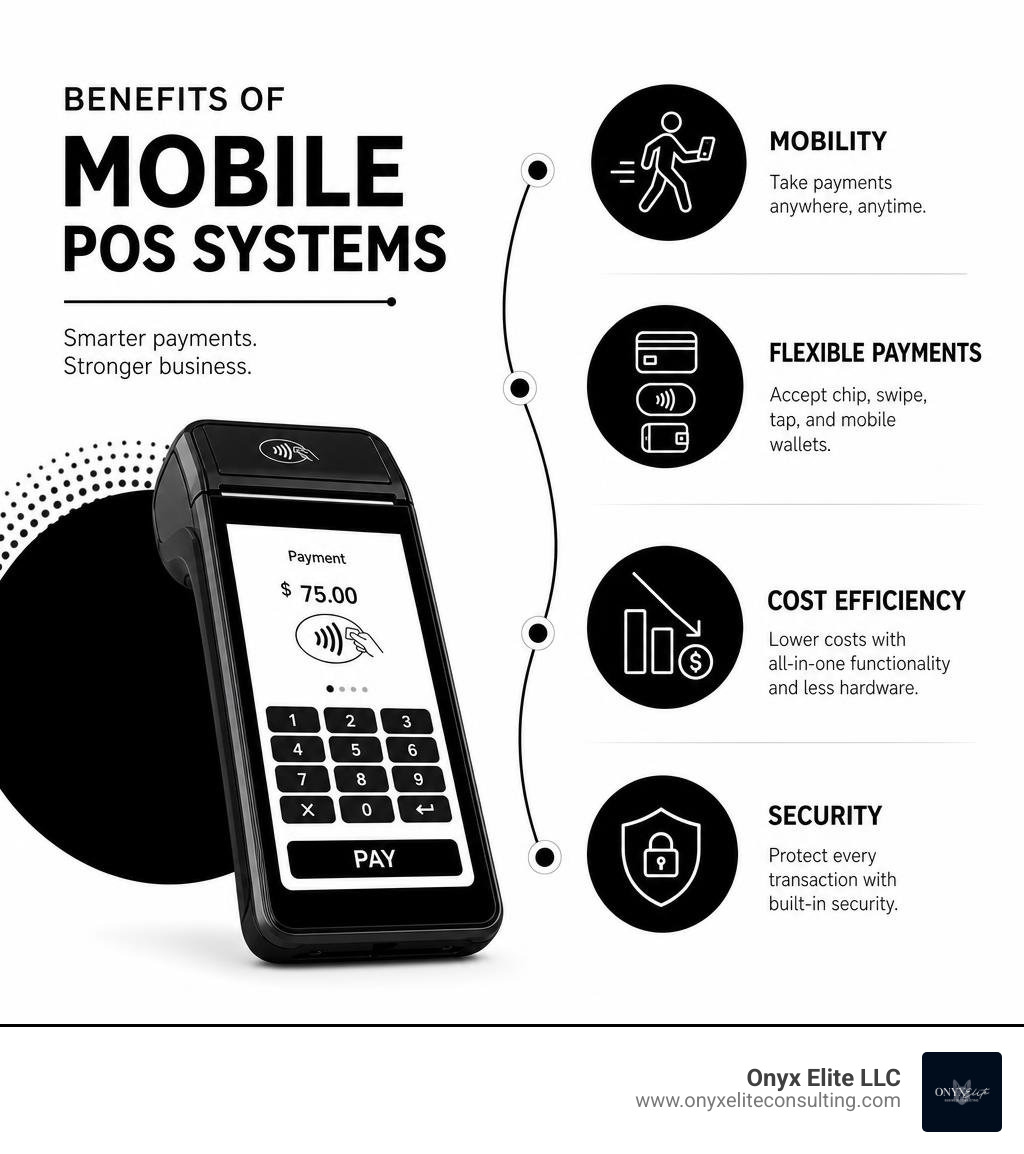
A handheld Android POS is a compact, mobile payment terminal that runs on the Android operating system and lets you accept payments, scan barcodes, and print receipts — all from one device you can hold in your hand.
Here are the top handheld Android POS options to know in 2026:
| Device | Display | Battery | Key Feature |
|---|---|---|---|
| PAX A920Pro Duo | 6.56 in | 6000mAh | PCI PTS 7.x, dual screen |
| Ciontek CS50S | 6.75 in | 3000mAh | Android 16, SoftPOS |
| POSZEO T6 | 6.5 in | 2600mAh | PCI 6, 95mm/s printer |
| ZCS Z92 | 5.5 in | 3020mAh | Budget-friendly, $99–$130 |
| Touch Dynamic Quest | 6.5 in | N/A | IP54, pocket-sized |
The way customers pay has changed fast. Contactless payments spiked 40% in early 2020 and never looked back. Customers expect speed, flexibility, and a frictionless checkout — whether they're at a restaurant table, a pop-up stall, or a retail aisle.
Traditional fixed POS terminals can't keep up. They tie your staff to a counter, slow down service, and create bottlenecks that cost you sales.
Mobile billing hardware solves this. A single handheld device can replace a stack of equipment — card reader, barcode scanner, receipt printer — and move with your team wherever business happens.
I'm Doru Angelo, Founder & CEO of Onyx Elite LLC, and with over a decade of experience in business consulting and the hospitality industry, I've seen how the right handheld Android POS can transform operational efficiency and customer experience for growing businesses. In this roundup, I'll break down exactly what to look for and which devices deliver the most value in 2026.
What is a Handheld Android POS and How Does It Work?
At its core, a handheld Android POS is an all-in-one mobile computer built specifically for commerce. Unlike consumer smartphones, these devices are reinforced with enterprise-grade hardware, including integrated secure card readers (EMV, magnetic stripe, and NFC), high-speed thermal receipt printers, and dedicated 2D barcode scanners.
These devices operate by connecting directly to cloud-based point-of-sale software. When a staff member inputs an order, the transaction data is transmitted securely via Wi-Fi or cellular networks to your central POS system. This allows for real-time syncing of sales data, inventory levels, and customer profiles.
Because the operating system is Android, the user interface is immediately familiar to anyone who has used a modern smartphone. This drastically reduces staff training times and allows for seamless multitasking, such as switching from a checkout screen to an inventory lookup app with a single swipe.

How a Handheld Android POS Transforms Retail and Hospitality
For businesses in West Hartford, CT, and across the state, operational speed is everything. Implementing Mobile Handheld POS Systems directly addresses the most common operational bottlenecks:
- Queue-Busting: During busy weekends in Blue Back Square, retail staff can walk the sales floor, scan items, and check out customers directly in the aisles. This prevents long checkout lines and reduces cart abandonment.
- Tableside Ordering and Payments: In restaurants and cafes along Park Road, servers can take orders directly at the table, send them instantly to the kitchen, and process payments without ever walking away with the customer's credit card.
- Real-Time Inventory Tracking: Staff can scan barcodes on the sales floor to instantly check stock levels, view product variants, or verify prices without running back to a legacy counter terminal.
- Field Services and Deliveries: For local delivery fleets and mobile service providers across Connecticut, these devices provide reliable payment processing, location tracking, and instant physical proof-of-delivery receipts on the spot.
Traditional Terminals vs. Mobile Android Hardware
Legacy POS setups are rigid, expensive, and require a dedicated counter space complete with a monitor, separate card terminal, receipt printer, and a nest of cables.
By contrast, mobile Android terminals offer complete portability and a significantly lower total cost of ownership. They also support modern features like SoftPOS, which allows merchants to turn any NFC-compatible Android device into a payment terminal without needing extra hardware attachments.
For businesses looking to transition from these older, clunky setups, understanding the modern payment landscape is crucial. Navigating this shift is much easier when you partner with experts who understand the nuances of Credit Card Processing and how to optimize your hardware stack for maximum efficiency.
Key Features to Look For in a Handheld Android POS
When evaluating a handheld Android POS for your business, you need to look beyond the surface specs. A brilliant touchscreen with high resolution is great, but it must be backed by a modern operating system (ideally Android 12 or newer) to ensure long-term software compatibility and security patch support.
Durability and ergonomics are equally critical. Devices designed with an IP54 or higher rating can withstand dust, splashes, and accidental drops on concrete floors. The physical design should feel balanced in the hand, reducing wrist fatigue for employees who carry the device throughout an eight-hour shift.
Comparing the Best Handheld Android POS Models on the Market
To help you find the right mobile billing hardware, we have highlighted the standout models currently leading the market in 2026:
- PAX A920Pro Duo: This is a premium, highly secure mobile terminal running Android 14. It stands out with a large 6.56-inch HD+ main display and a secondary 1.99-inch customer-facing screen for transparent transactions. Certified to PCI PTS 7.x standards, it features a massive 6000mAh battery and a fast 80mm/s printer, making it a powerhouse for high-volume retail and hospitality environments.
- Ciontek CS50S: Running Safedroid OS based on Android 16.0, this cutting-edge device features an octa-core 2.0 GHz processor and a 6.75-inch main display. It includes a dedicated 2.5-inch client screen, supports both receipt and label printing at 80mm/s, and offers omni-directional scanning capable of reading damaged barcodes.
- POSZEO KB11: For businesses that require a larger screen without losing portability, the KB11 offers an 11-inch HD touchscreen. It easily transitions between a mobile tablet and a docked counter workflow with its professional I/O base (supporting RJ11/RJ12 cash drawers). It features a robust 6400mAh battery and a high-speed thermal printer supporting both 80mm and 58mm paper rolls.
- Quest Handheld: This pocket-sized 6.5-inch Android 13 tablet POS from Touch Dynamic is built for rugged use with an IP54 rating. It supports specialized payment modules like the Ingenico Moby 5500 and ID Tech VP3350, making it highly adaptable for tableside ordering and field services.
| Feature | PAX A920Pro Duo | Ciontek CS50S | POSZEO KB11 | Touch Dynamic Quest |
|---|---|---|---|---|
| OS Version | Android 14 | Android 16.0 | Android 12 / 13 | Android 13 (GMS) |
| Main Display | 6.56" HD+ | 6.75" IPS | 11.0" HD IPS | 6.5" HD |
| Customer Screen | Yes (1.99") | Yes (2.5") | Optional (2.4") | No |
| Printer Speed | 80 mm/s | 80 mm/s | Fast (80/58mm) | No (External) |
| Battery Capacity | 6000 mAh | 3000 mAh (7.6V) | 6400 mAh | 10W USB Charging |
| Durability Rating | Standard Mobile | Standard Mobile | Standard Mobile | IP54 Dust & Splash |
Hardware Specifications: Printers, Scanners, and Battery Life
If your business handles high-volume transactions, you cannot afford to wait on slow hardware. Look for devices with a print speed of at least 50mm/s to 80mm/s to keep customer lines moving.
Dedicated 2D barcode scanners are superior to standard camera scanning; they use specialized red-light or laser engines to instantly capture QR codes and barcodes from any angle, even if the packaging is crumpled or poorly lit.
Battery capacity must match your operational hours. A battery with a capacity of 3000mAh to 6000mAh (such as the pure cobalt cells used in the KB11 or the massive pack in the PAX A920Pro Duo) ensures your terminal stays online for a full shift.
To maximize checkout speeds, choosing an Android Handheld POS with Printer that supports fast paper roll replacement and has a durable print head is essential for maintaining a seamless workflow.
Security, Connectivity, and Total Cost of Ownership
Investing in mobile POS hardware requires a clear understanding of data security, connectivity needs, and long-term costs. Protecting cardholder data is not just a best practice—it is a legal requirement.
PCI Compliance and Data Security
Any device processing credit cards must adhere to strict PCI (Payment Card Industry) standards. Modern handheld terminals, like the PAX A920Pro Duo, feature PCI PTS 7.x and SRED (Secure Reading and Exchange of Data) certifications, ensuring that sensitive card data is encrypted at the physical point of entry.
With built-in secure elements, dual PSAM slots, and advanced encryption protocols, these devices protect your business from data breaches and chargebacks.
To navigate these complex standards and safeguard your revenue, leveraging professional Credit Card Processing Consulting Guide resources and implementing robust Chargeback Management Services can save your business thousands of dollars in potential fines and lost disputes.
Connectivity Options and Software Integration
A mobile terminal is only as good as its connection. To prevent dropped sales, look for devices that offer:
- Dual-Band Wi-Fi (2.4GHz / 5GHz): For fast, stable connections inside your store or restaurant.
- 4G LTE Cellular: Essential for food trucks, outdoor pop-ups, and delivery drivers working across Connecticut.
- Bluetooth 5.0+: For pairing external peripherals like kitchen buzzers, weight scales, or additional barcode scanners.
- GNSS/GPS: For location-aware workflows, curbside pickup validation, and delivery route tracking.
Additionally, your hardware must integrate smoothly with your back-end accounting, inventory, and scheduling software. At Onyx Elite Consulting, we specialize in helping businesses align their operational technology through tailored Payment Strategy Consulting to ensure your systems communicate flawlessly.
If you are evaluating your overall financial ecosystem, you may also want to explore our guides on Payment Processing Solutions Connecticut, review the comprehensive Credit Card Processing Connecticut Guide, or learn more about optimizing your cash flow through tailored Invoice Financing Solutions and evaluating your Merchant Account Options.
Frequently Asked Questions About Mobile POS Terminals
What is the average price of a handheld Android POS system?
The hardware cost for a reliable handheld Android POS terminal generally ranges from $99 to $130 for entry-level models (like the ZCS Z92), while premium, highly certified devices (like the PAX A920Pro Duo) can range from $300 to $600 depending on the distributor and volume.
That the total cost of ownership also includes software subscription fees, payment processing rates, and potential cellular data plans for mobile connectivity. For a deeper breakdown of system costs, refer to this POS System Pricing Guide.
Can these devices run third-party Android applications?
Yes. Because these terminals run on standard or customized versions of the Android operating system, they can easily run third-party business apps. Many manufacturers offer dedicated app stores (like PAXSTORE) or support Mobile Device Management (MDM) policies. MDM allows business owners to remotely install, update, and lock down applications so employees cannot uninstall essential software or access unauthorized apps.
How do handheld terminals handle receipt printing and scanning?
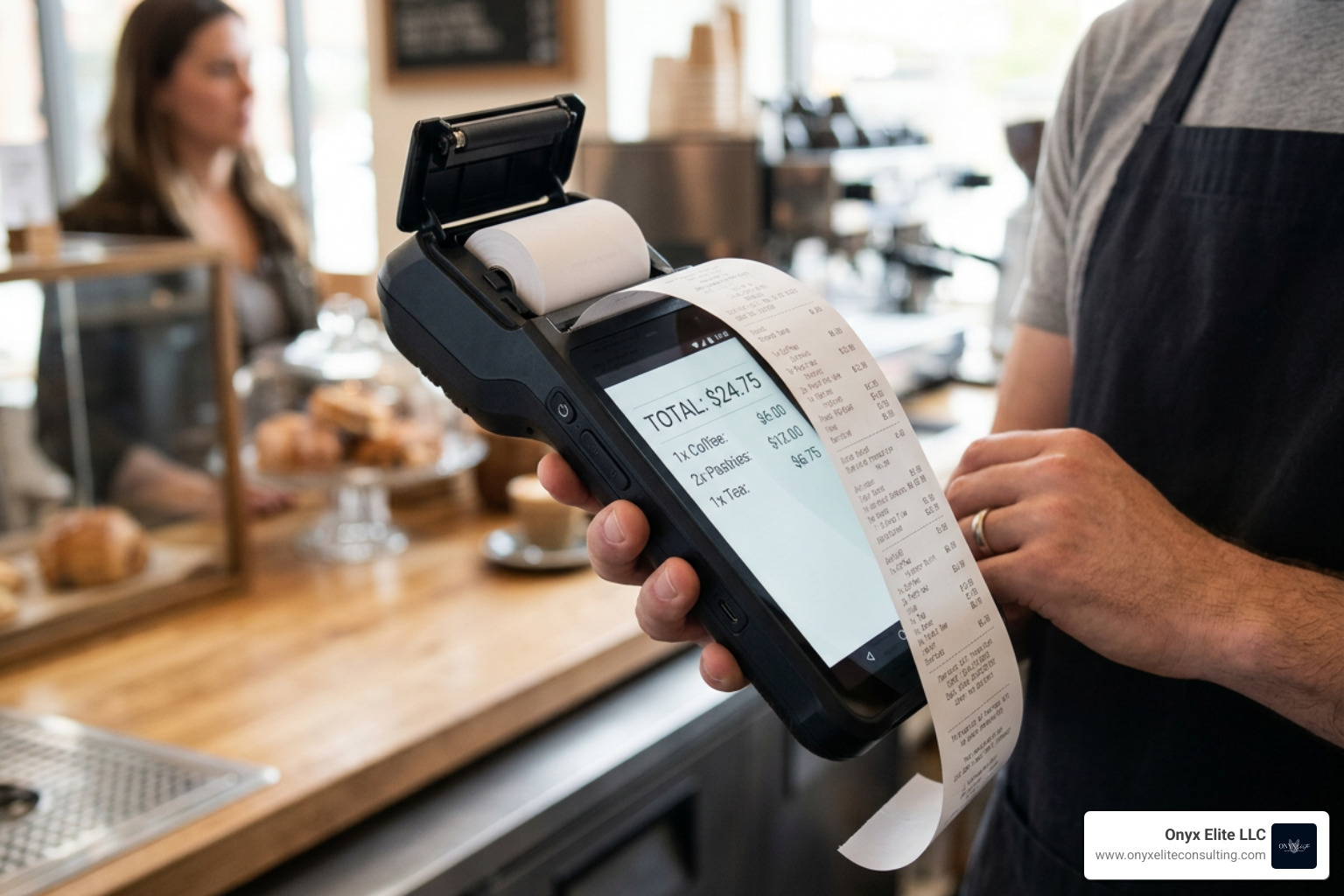
Handheld terminals feature built-in thermal printers that use heat instead of ink to print receipts on standard 58mm or 80mm thermal paper rolls, significantly reducing ongoing supply costs.
For scanning, they utilize integrated 1D/2D imaging engines to instantly decode barcodes and QR codes. The market demand for these integrated features is massive; for instance, popular handheld scanning accessories like the NETUM C750 have gathered over 1,678 customer reviews with 800+ units bought in the past month alone, while top-tier standalone thermal printers like the Star Micronics TSP143IIIBi regularly see over 500+ units bought monthly, proving how critical reliable printing and scanning are to daily business operations.
Conclusion
Upgrading to a handheld Android POS is no longer just an option for businesses aiming to stay competitive—it is a necessity. By bringing the checkout directly to your customers, you eliminate wait times, boost staff efficiency, and unlock new sales opportunities.
At Onyx Elite Consulting, we help businesses in West Hartford, CT, and throughout Connecticut navigate these technological shifts. We design custom payment strategies, optimize merchant accounts, and implement the ideal hardware solutions to drive sustainable growth.
Ready to transform your checkout experience and scale your business operations? Contact us today to explore our comprehensive Onyx Elite Consulting Services and let's build a more efficient future together.