

How to Find the Best Credit Card Machines in Connecticut
Why Credit Card Processing Connecticut Businesses Use Matters More Than You Think
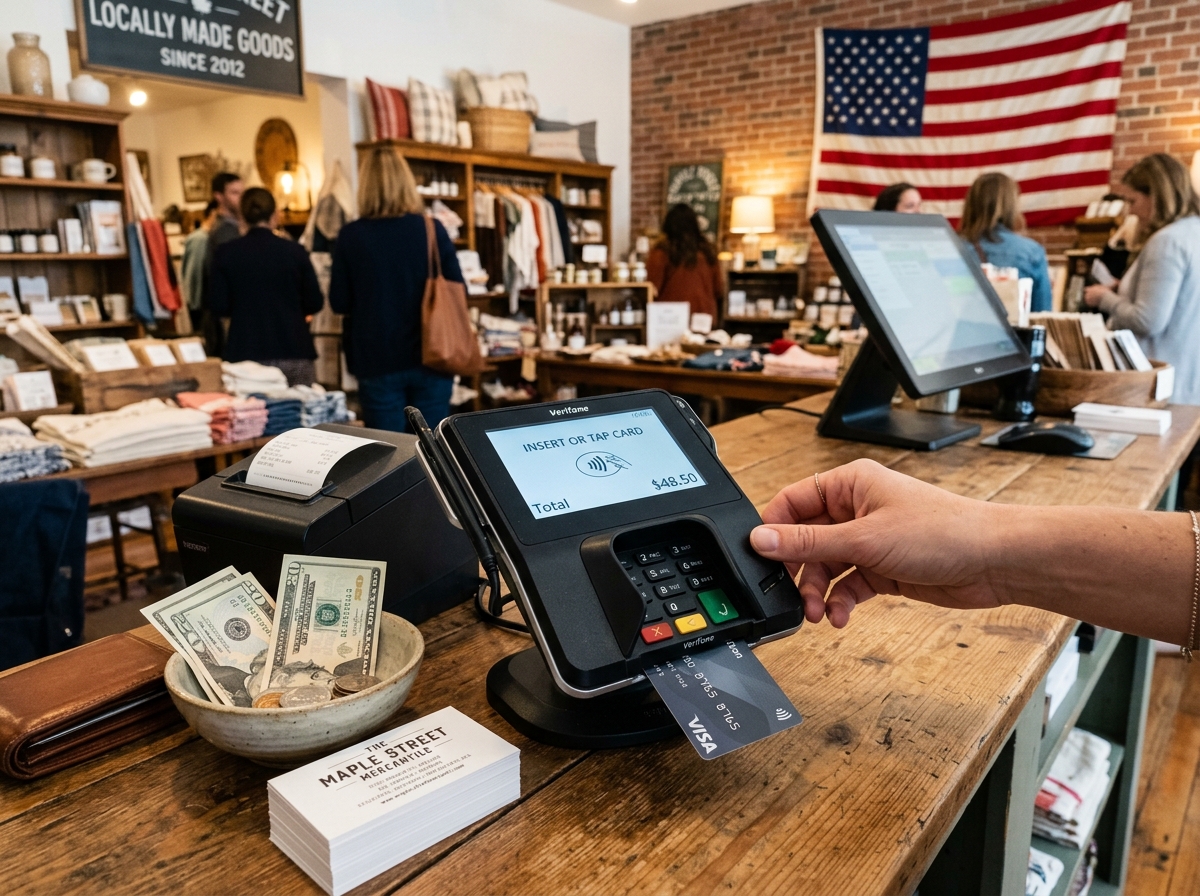
Credit card processing Connecticut businesses rely on is not a one-size-fits-all decision. The right processor can save you thousands per year. The wrong one can cost you in hidden fees, legal penalties, and lost customers.
Here is a quick overview of what Connecticut business owners need to know:
| Topic | Key Fact |
|---|---|
| Surcharges | Illegal in Connecticut under Public Act 24-142 |
| Cash discounts | Legal, if properly disclosed to customers |
| Violation penalty | $500 per violation |
| Potential savings | 10% to 40% by switching to the right processor |
| Approval rates | Some providers approve 98.9% of applicants |
| Pricing model to look for | Interchange-plus (transparent, no hidden fees) |
| POS hardware costs | Starting around $650 per station |
| Monthly fees | Starting around $70 per station |
Connecticut has some of the strictest rules in the country around how businesses can handle card payment fees. And with processing costs eating into already tight margins, choosing the right merchant services partner is a real business decision — not just a back-office task.
Whether you run a restaurant in Hartford, a retail shop in New Haven, or a service business in Bridgeport, the payment technology you use affects your speed at checkout, your compliance with state law, and your bottom line every single month.
I'm Doru Angelo, Founder and CEO of Onyx Elite LLC, and with over a decade of experience in business consulting and the hospitality industry, I have helped Connecticut businesses cut through the noise around credit card processing Connecticut to find solutions that are compliant, cost-effective, and built to scale. Let's break down exactly what you need to know to make the right choice.
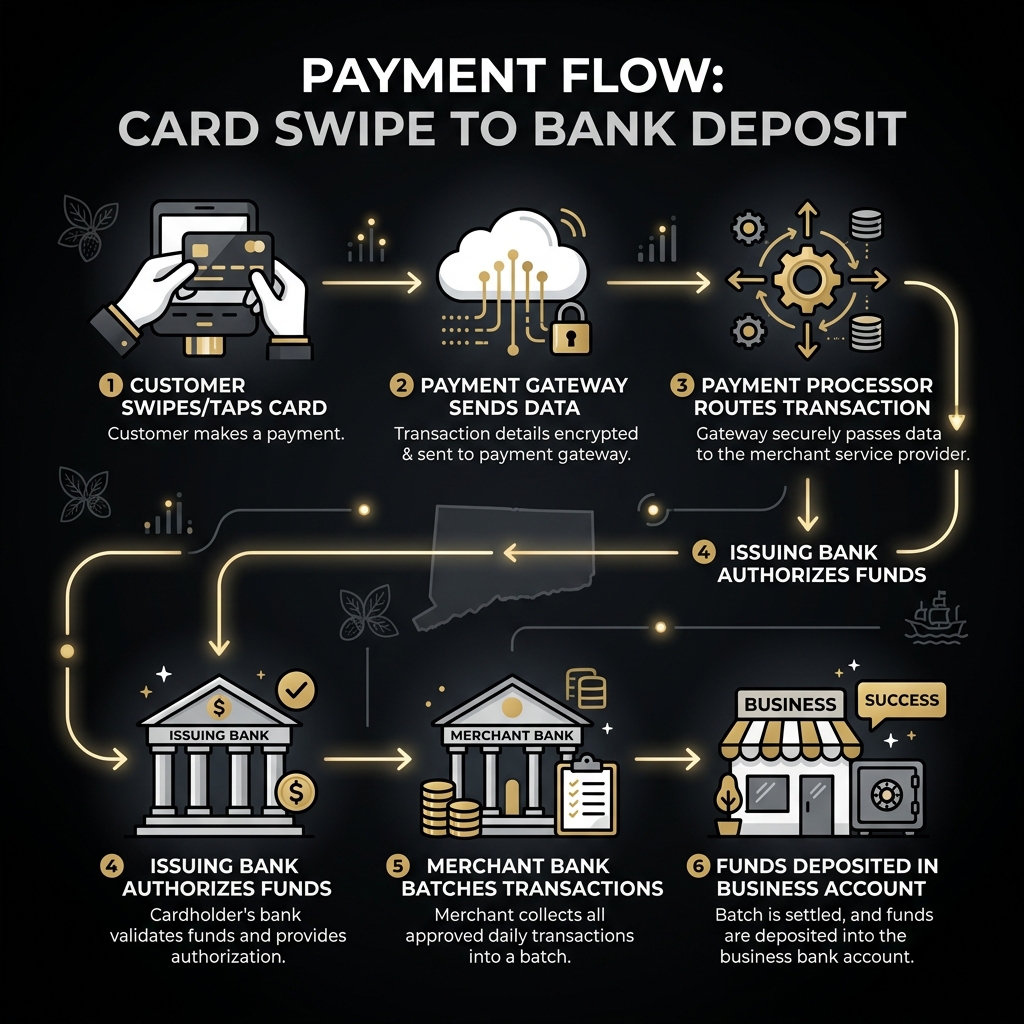
Understanding the Landscape of Credit Card Processing Connecticut
When we look at the business environment in the Constitution State, we see a diverse mix of historic main streets and cutting-edge corporate hubs. From the bustling insurance capital in Hartford to the coastal commerce of New Haven and the industrial roots of Bridgeport, every region has unique payment needs.

In West Hartford and surrounding areas, local merchant services aren't just about swiping a card; they are about integration. Modern businesses are moving away from standalone "dumb" terminals toward ecosystems that connect their sales data with their inventory and marketing.
The landscape here is also defined by high standards. Connecticut consumers expect fast, secure transactions, whether they are using an EMV chip card, Apple Pay, or Samsung Pay. For business owners, this means your credit card processing Connecticut solution must be robust enough to handle peak hours without a glitch while keeping data secure to maintain PCI compliance.
Connecticut Surcharge Laws and Legal Pricing Strategies
One of the most confusing parts of running a business in our state is the legal "minefield" regarding fees. Many business owners see national news about credit card surcharges and assume they can apply those same rules here. In Connecticut, that is a very expensive mistake to make.
Under Public Act 24-142, Connecticut law explicitly prohibits businesses from charging a surcharge for using a credit card over another payment type. If you add a "convenience fee" or a "processing fee" specifically to a credit card transaction at the register, you are likely in violation of state law.
The stakes are high: violations can result in a penalty of $500 per violation. For a busy retail shop, a single day of non-compliant transactions could lead to devastating fines. This is why having a solid payment strategy is vital for your long-term health.
Navigating Credit Card Processing Connecticut Regulations
Legal compliance in Connecticut is designed primarily for consumer protection. The state wants to ensure that the price a customer sees on a tag is the price they pay at the register, regardless of the plastic in their wallet.
However, there are exceptions. Municipalities, government agencies, courts, and state marshals are often exempt from these surcharge prohibitions. But for the average "Main Street" business—restaurants, retail shops, and service providers—the ban is absolute. To stay safe, you should review the official CT Surcharge Law Info to ensure your current practices don't put you at risk.
Implementing Cash Discounts and Dual Pricing
If you can't charge a surcharge, how do you offset the 2% to 4% you lose on every swipe? The answer lies in cash discounts and dual pricing.
While you cannot add a fee to a credit price, you can offer a discount to those paying with cash. This might seem like semantics, but legally, it is a world of difference.
- Cash Discounts: You list your "standard" price (the credit price) and offer a lower price for cash. For example, a sign might state, "All listed prices are discounted by 3% if you pay in cash."
- Dual Pricing: This is common at Connecticut gas stations. You clearly display two prices for every item: one for cash and one for credit.
The key here is transparency. To stay compliant, your signage must be clear and prominent before the customer reaches the point of sale. This ensures the customer isn't surprised by the total when it's time to pay.
Essential Features and POS Systems for Local Industries
Choosing a provider for credit card processing Connecticut requires looking beyond the "free" equipment offers. You need a partner that offers transparent pricing models—specifically interchange-plus pricing. This model passes the actual cost from the card brands (Visa, Mastercard) directly to you with a small, flat markup, preventing the hidden "tier" jumps that make other bills skyrocket.
We also recommend looking for providers that offer:
- PCI Level 1 DSS Compliance: To ensure your customer data is protected against breaches.
- 24/7 Support: Because if your system goes down during a Friday night rush in New Haven, you can't wait until Monday morning for a fix.
- No Long-Term Contracts: You should be able to switch if the service doesn't meet your needs.
For a deeper dive into how to evaluate these features, check out our guide to processing consulting.
Optimizing Credit Card Processing Connecticut for Restaurants and Retail
Different industries have vastly different needs. A boutique in West Hartford needs inventory management, while a bistro in Hartford needs table management and kitchen display integrations.
Modern Point of Sale (POS) systems like Clover or specialized restaurant platforms allow you to:
- Track inventory in real-time.
- Manage employee shifts and permissions.
- Accept contactless and mobile wallet payments (Apple Pay, Google Pay).
- Eliminate reliance on high-fee third-party delivery apps by using integrated online ordering.
Below is a breakdown of what you can expect regarding costs for popular POS setups in Connecticut:
| Hardware Type | Estimated Initial Cost | Estimated Monthly Service |
|---|---|---|
| Countertop Station | $650+ | $70+ |
| Handheld/Mobile Device | $820+ | $70+ |
| Virtual Terminal | $0 (Software based) | $15 - $30 |
| Mobile Reader (Smartphone) | $0 - $100 | Varies by volume |
How to Switch and Maximize Processing Savings
Many Connecticut businesses are overpaying by 10% to 40% without even realizing it. This often happens because of "statement creep," where small, unannounced fees are added over time.
We suggest a "merchant statement audit." By comparing your current fees against an interchange-plus model, you can often find thousands in annual savings. Switching providers doesn't have to be a headache; many modern processors allow you to keep your existing equipment or provide EMV-compliant terminals at no upfront cost to earn your business.
If you're looking for solutions for Connecticut businesses that prioritize transparency, start by requesting a month-to-month agreement with no early termination fees.
Frequently Asked Questions about Merchant Services
What is a virtual terminal?
A virtual terminal is a web-based portal that allows you to turn your computer or tablet into a credit card machine. It is perfect for service-based businesses in Connecticut that take orders over the phone or need to send digital invoices. You simply log in, enter the card details, and process the payment securely without needing physical hardware.
Can I accept all card types?
Yes. Most modern credit card processing Connecticut solutions allow you to accept all major credit and debit cards, including Visa, MasterCard, Discover, and American Express. Many also support "contactless" payments and mobile wallets like Apple Pay and Google Pay, which are becoming the standard for younger consumers.
Are high-risk accounts available in Connecticut?
Absolutely. Certain industries—like smoke shops, CBD retailers, or high-volume e-commerce sites—are flagged as "high-risk" by traditional banks. However, specialized merchant service providers in Connecticut have approval rates as high as 98.9% for these sectors, ensuring that even "hard-to-place" businesses can accept payments securely.
Conclusion
Finding the best credit card processing Connecticut has to offer isn't just about finding the lowest rate; it's about finding a partner that understands the local legal landscape and provides the technology to help you grow. From avoiding the $500-per-violation surcharge trap to implementing a high-tech POS system that manages your inventory, the right choice pays for itself.
At Onyx Elite LLC, we believe in empowering local entrepreneurs with the tools they need for operational excellence. We don't just look at your merchant statement; we look at your entire business ecosystem to find where you can save time, energy, and money.
If you are ready to stop overpaying and start growing, we are here to help you navigate the complexities of the Connecticut market. Get started with credit card processing today and see how much your business can save.