In Depth Guide to Event Management Solutions for Success
What Is Event Management (And Why It Matters for Your Business)
Event management is the end-to-end process of planning, coordinating, and executing events — from the earliest concept stage through post-event analysis. It applies project management principles to create experiences that drive real business outcomes.
Quick answer: What is event management?
| Element | Details |
|---|---|
| Definition | Applying project management to the creation and execution of personal or corporate events |
| Scope | Covers in-person, virtual, hybrid, and webinar formats of any size |
| Key phases | Research to Design to Planning to Coordination to Evaluation |
| Common event types | Conferences, trade shows, festivals, corporate meetings, sports events, product launches |
| Core skills needed | Organization, budgeting, communication, negotiation, risk management |
| Industry growth | 11% projected job growth from 2024 to 2034 |
For business leaders, events are not just logistics exercises. They are strategic tools — for building brand authority, generating pipeline, deepening client relationships, and rallying internal teams.
Yet most founders and business operators underestimate what it actually takes to pull one off well. Coordinating venues, vendors, budgets, speakers, technology, risk coverage, and attendee experience simultaneously is genuinely complex work. When done poorly, events drain resources. When done well, they become one of the highest-ROI investments a business can make.
This guide breaks down everything you need to know — from core concepts to execution frameworks to the tools and credentials that separate good events from great ones.
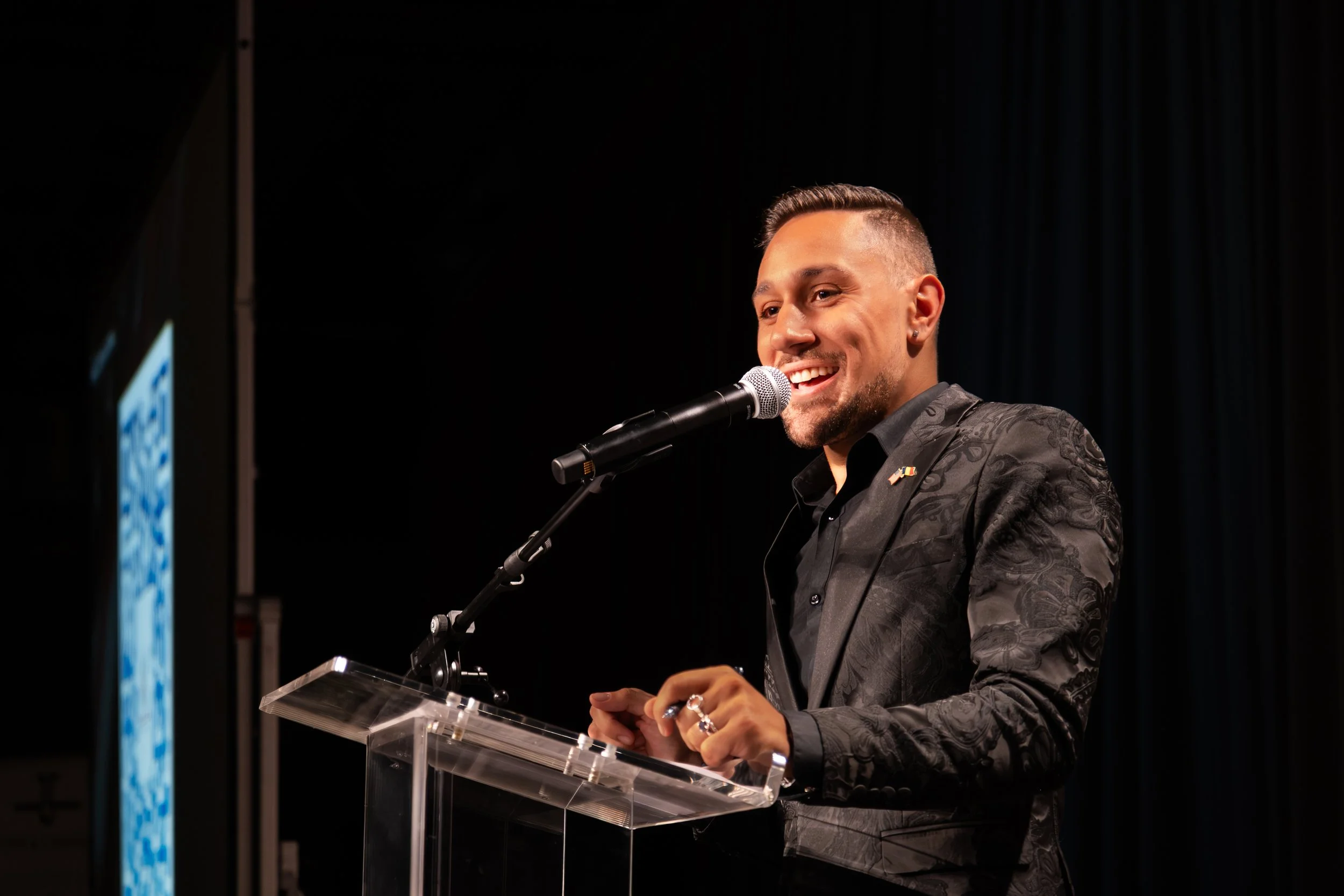
My name is Doru Angelo, Founder & CEO of Onyx Elite LLC, and with over a decade of experience in business consulting and the hospitality industry, I've seen how strategic event management can transform a brand's visibility and operational impact. I've built this guide to give founders and business leaders a clear, practical framework for approaching events as a growth engine, not just a line item.
The Strategic Value of Modern Event Management
In today's digital-heavy environment, physical and highly curated virtual spaces have taken on a new level of importance. With artificial intelligence scaling content creation and flooding digital channels with noise, in-person presence has become a scarce, high-trust signal in modern marketing. We call this the "presence premium." When a client or partner chooses to spend their time with us in a physical or highly interactive digital space, they are offering their most valuable asset: their undivided attention.
To capture this premium, modern event management goes far beyond booking a room and ordering a tray of sandwiches. It requires a deep brand study, clear target audience identification, creative concept devision (devising), and seamless technical coordination.

What is Event Management and How Does It Differ from Planning?
It is common to hear the terms "event planning" and "event management" used interchangeably, but in professional circles, they represent distinct scopes of work.
Event planning is focused on the blue sky and structural phases: the initial design, theme selection, promotion, and vendor selection. It answers the what, where, and who.
Event management, on the other hand, is the overarching project management framework. It encompasses the entire lifecycle, taking those plans and executing them with operational precision. It answers the how and handles the actual technical coordination, day-of logistics, risk mitigation, and post-event reporting.
| Feature | Event Planning | Event Management |
|---|---|---|
| Primary Focus | Concept, design, and curation | Execution, logistics, and project management |
| Key Activities | Theme selection, menu curation, speaker booking, promotional planning | Vendor coordination, contract execution, technical setup, day-of operations |
| Timeline | Heavily front-loaded before the event | Active from initial research through post-event analysis |
| Key Metric | Creative vision and alignment with brand goals | Operational safety, budget adherence, and measurable ROI |
While a small gathering might only require a planner, large-scale corporate summits, trade shows, and community festivals demand robust management. Without a structured management approach, even the most beautifully planned event can fall apart during execution.
Key Phases of the Event Lifecycle
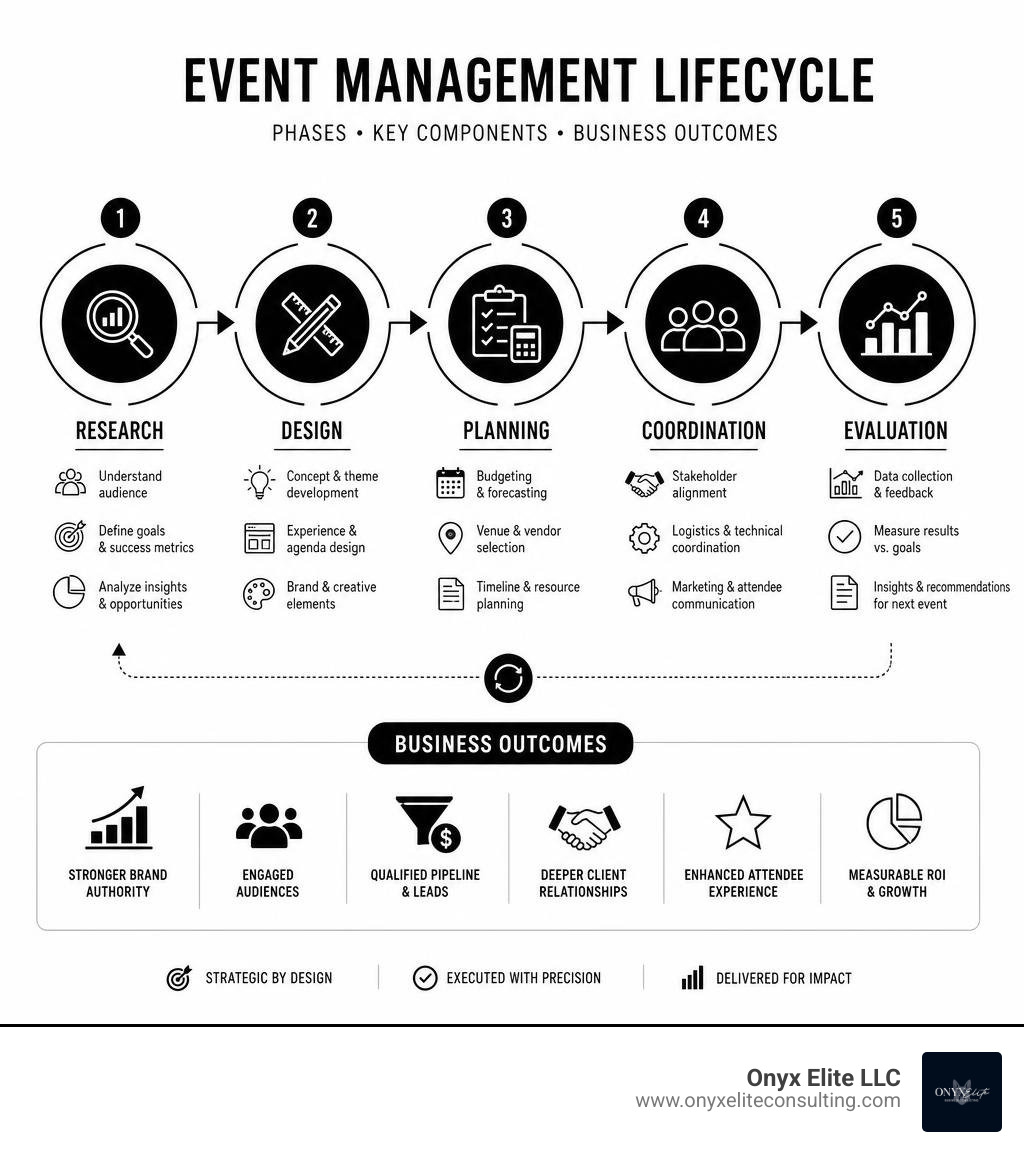
To manage an event successfully, we break the process down into five structured, chronological phases:
- Research: This is the feasibility stage. Before spending a single dollar, we must conduct a thorough SWOT analysis (Strengths, Weaknesses, Opportunities, Threats) to determine if the event is viable. Do we have the necessary human capital? Is the budget realistic? What socio-economic forces might impact attendance?
- Design: Once the event is deemed feasible, we move to conceptualization. Here, we define the event's look, feel, and flow. We map out what we want our attendees to gain from the experience and create a conceptual blueprint.
- Planning: This is the logistical heavy lifting. We build a master chronological timeline that integrates every single element of the event into one calendar. We also develop a comprehensive site plan, conduct venue inspections, secure permits, and establish legal contracts.
- Coordination: The execution phase. This involves managing the day-of operations, coordinating onsite service providers (catering, public safety, media services), handling registration bottlenecks, and managing the physical setup of the venue.
- Evaluation: The post-event phase. We measure our success against our initial goals using both quantitative data (such as registration rates, lead generation, and budget variances) and qualitative feedback (such as attendee surveys and post-event debriefs).

Operational Logistics: Sourcing, Budgeting, and Risk Mitigation
Executing an event with precision requires exceptional operational discipline. For organizations looking to optimize these workflows, we often suggest looking at our Operational Excellence Consulting services to align internal team capabilities with complex execution demands.
Venue Sourcing and Vendor Coordination
Sourcing the right venue is one of the most critical decisions in the entire process. It is not just about finding a space that looks good; it is about finding a venue that aligns with your logistical requirements, accessibility guidelines (such as ADA compliance), and budget constraints.
For businesses operating in our local region of West Hartford, Connecticut, choosing the right local partners is essential. Leveraging trusted local directories and networks can save dozens of hours of research. For instance, the Event Management Category provided by the local West Hartford Chamber of Commerce is an excellent starting point for finding verified regional service providers.
If you are coordinating high-end experiential activations or private corporate functions in the Greater Hartford area, consulting curated directories like the Top 20 Event Planners In Hartford or browsing the 20 Best Event Planners for Hire in West Hartford, CT can connect you with specialized local talent who understand venue capabilities and local municipal permitting.
Once a venue is selected, a manager must coordinate multiple distinct service departments:
- Catering: Managing dietary restrictions, meal timing, and service styles.
- Facilities: Ensuring proper room setups, climate control, and waste management.
- Media Services: Coordinating audiovisual setups, lighting, and live-streaming feeds.
- Public Safety: Planning crowd control, emergency exits, and medical response protocols.
Risk Management and Liability Insurance
Events are inherently unpredictable. From sudden weather disruptions at outdoor venues to technical failures during a keynote address, risk is always present. We manage risk using four primary strategies: avoid, accept, manage, or transfer.
Transferring risk through comprehensive insurance is a standard industry requirement. Most professional venues require organizers to hold a minimum of $1,000,000 per occurrence and $2,000,000 aggregate in general liability coverage.
Additionally, event cancellation and business interruption insurance are vital safeguards. A 2020 survey by the Professional Convention Management Association (PCMA) highlighted a major industry gap: fewer than half of the surveyed organizers held cancellation coverage adequate to cover the losses incurred during large-scale disruptions.
For outdoor sports events or concerts, we are also seeing the rise of parametric insurance products. These policies trigger automatic, rapid payouts based on pre-defined parameters (such as a specific amount of rainfall or wind speed measured by local weather stations) rather than requiring a lengthy, traditional loss assessment process.
The Role of Technology, Sustainability, and Hybrid Formats
To ensure that your events align with your broader organizational goals, event strategy must be integrated into your overall business framework. We help organizations build these long-term frameworks through our Corporate Strategy Development consulting, ensuring that every event serves as a direct driver of business growth.
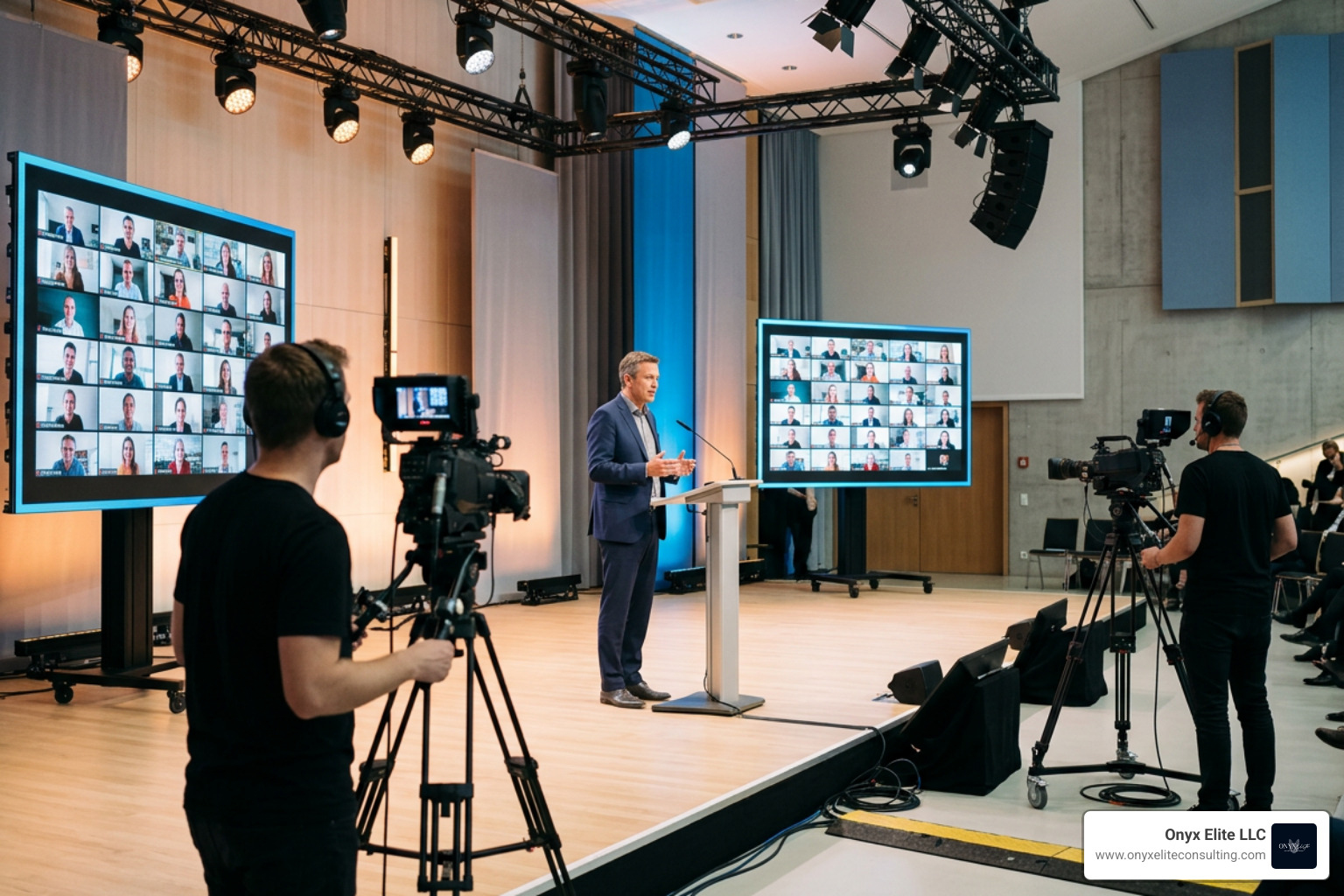
Leveraging Event Management Software for Seamless Execution
Technology has completely transformed how we plan and execute events. Instead of managing complex logistics on fragmented spreadsheets, modern organizers rely on unified, enterprise-grade event management software.
These platforms streamline the entire event lifecycle:
- Pre-Event: Building custom-branded websites, managing rules-based registration journeys, and automating promotional email campaigns.
- Onsite: Running self-service check-in kiosks, printing on-demand name badges with QR codes, and providing custom mobile apps for attendee navigation.
- Post-Event: Syncing attendee engagement data directly with CRMs to track lead generation and measure return on investment.
When choosing the right software tool for your organization, several top-tier platforms stand out:
- Cvent | Event Platform for In-person, Virtual, and Hybrid Events & Webinars : The industry giant used by 89% of the Fortune 100, managing millions of events globally with robust sourcing and AI-driven analytics.
- Event Management Software | A Tool For All Events | EventsAir : A highly trusted, feature-rich platform powering hundreds of thousands of complex events with specialized tools for speaker and abstract management.
- EventCreate | The #1 Ranked Event Management Software : An exceptionally user-friendly platform used by over 750,000 planners, ideal for quickly building stunning event websites and managing registrations.
- Enterprise Event Management Platform | Accelevents : A powerful, highly flexible enterprise platform with SOC 2 Type 2 certification, offering seamless integrations and excellent check-in and badging tools.
By consolidating your tools into a single platform, you eliminate data silos, reduce administrative busywork by up to 20%, and significantly minimize the risk of human error when making last-minute changes.
Eco-Friendly Practices and Carbon Footprint Reduction
Sustainability is no longer an afterthought in the event industry; it is a core operational requirement. "Event greening" initiatives must be integrated at the very inception of a project, involving clients, venues, and suppliers from day one.
One of the most effective ways to reduce an event's environmental impact is by offering virtual or hybrid attendance options.
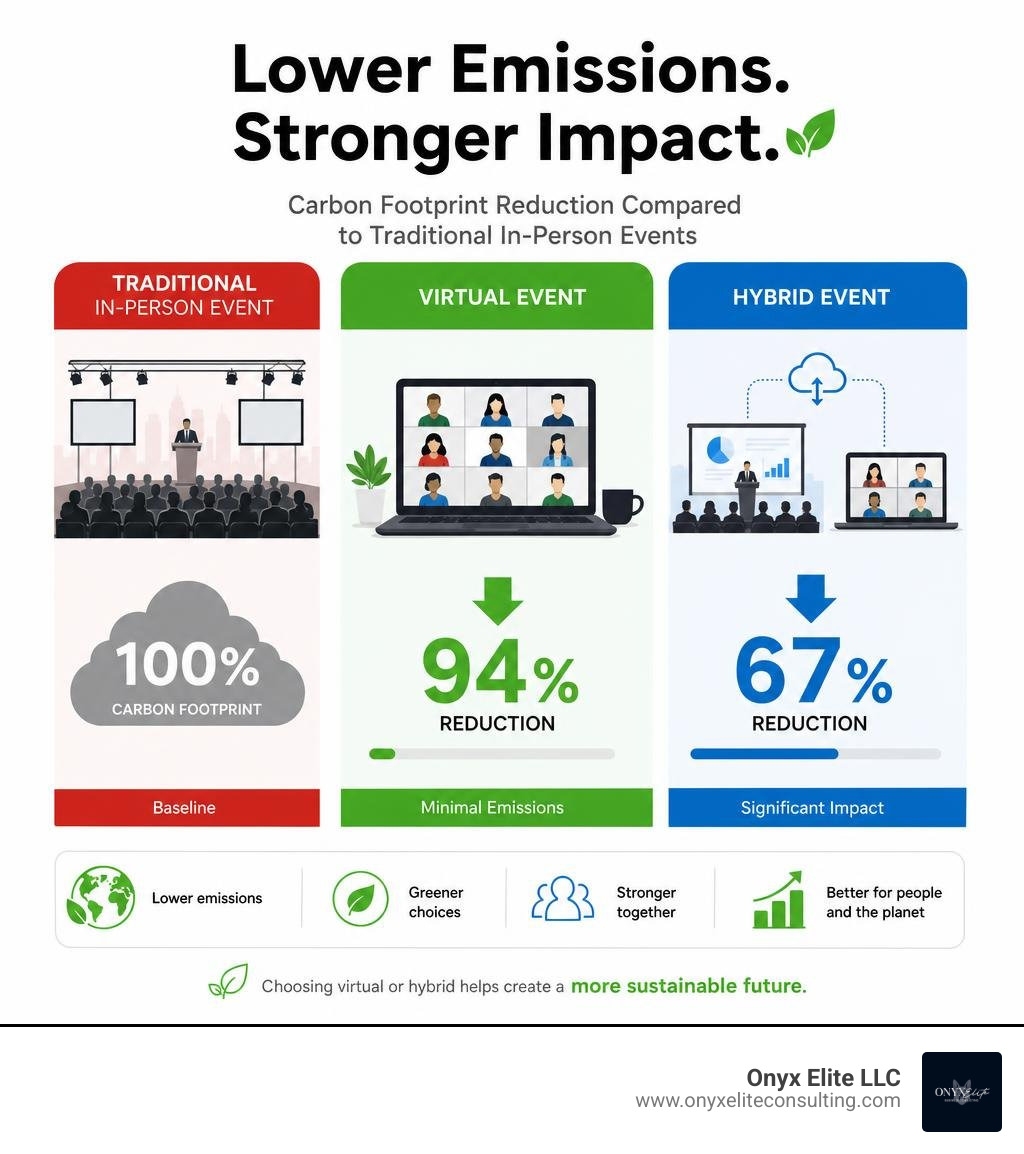
A recent study shows that transitioning events from traditional in-person formats to:
- Virtual modes can reduce the event's carbon footprint by up to 94%.
- Hybrid modes (even with over 50% physical participation) can reduce the carbon footprint by 67%.
For physical gatherings, simple operational changes can make a massive difference. We recommend prioritizing venues with active recycling programs, sourcing catering from local farms to minimize transportation emissions, and using digital ticketing and mobile apps to eliminate paper waste entirely.
Professional Development: Skills, Education, and Certifications
Whether you are looking to build an internal event team or transition your career into this dynamic field, understanding the educational pathways and core competencies of the industry is essential. If you are a business leader looking to scale your team's execution capabilities, our Business Consulting Services can help you design the right organizational structures and roles.
Essential Skills for Event Leaders
A successful event manager must possess a unique blend of highly structured technical skills and fluid interpersonal abilities. It is a role that is frequently cited as one of the most stressful career paths due to its , high-stakes environment.
Key competencies include:
- Organization & Project Management: The ability to manage hundreds of moving parts, multiple vendor timelines, and complex site plans simultaneously.
- Negotiation: Securing favorable terms with venues and suppliers to maximize budget efficiency.
- Crisis Management: Remaining calm under pressure and executing backup plans seamlessly when unexpected challenges arise.
- Creative Brand Alignment: Designing experiences that reflect the host organization's values. For businesses looking to refine their event messaging and visual identity, exploring Brand Development Consulting can ensure your event design aligns perfectly with your overall market positioning.
Academic Degrees and Industry Certifications
As the industry has grown, the pathways to entering the profession have become highly structured. Academically, universities now offer specialized degrees in the field. For example, the NYU MS in Event Management program reports that 84% of its graduates are working or continuing their education shortly after graduation, with a projected industry job growth of 11% and median salaries for high-level directors reaching $146,300.
For professionals looking to validate their expertise, there is an important distinction to understand between a professional certificate and a professional certification:
- Professional Certificate: Awarded by an educational institution (like a university) upon completing a specific course of study to build foundational skills.
- Professional Certification: A credential awarded by an independent industry body, typically requiring documented field experience and passing a rigorous exam to demonstrate advanced, specialized expertise.
The most widely recognized professional certifications in the industry include:
- Certified Meeting Professional (CMP): The global standard for convention and meeting planners.
- Certified Special Events Professional (CSEP): Focused on creative design, production, and execution of special events.
Frequently Asked Questions
What is the difference between a professional certificate and a professional certification?
A professional certificate is an academic credential awarded by an educational institution (such as a college or university) upon completing a specific curriculum. It is designed to build foundational skills and knowledge in a particular area.
In contrast, a professional certification is a formal credential awarded by a third-party industry association (such as the Events Industry Council for the CMP). It typically requires several years of verified professional experience, continuing education credits, and passing a comprehensive exam to demonstrate advanced, real-world expertise in the field.
What are the industry standards for event liability insurance?
The standard industry requirement for event general liability insurance is a minimum of $1,000,000 per occurrence and $2,000,000 aggregate. Most professional venues, municipal parks, and corporate facilities in Connecticut require organizers to submit a Certificate of Insurance (COI) matching these limits before they will allow any physical setup to begin.
How do virtual events impact environmental sustainability?
Virtual events have a remarkably positive impact on environmental sustainability. By eliminating international and local travel, hotel stays, physical venue energy consumption, and food waste, moving an event to a fully virtual format reduces its carbon footprint by approximately 94%. Hybrid formats that combine physical and digital options still achieve a substantial 67% reduction in carbon emissions compared to traditional, fully in-person events.
Conclusion
At Onyx Elite LLC, we believe that an event should never be treated as just a temporary gathering. It should be designed as a strategic asset — a carefully crafted experience that drives sustainable growth, reinforces your brand's market position, and fosters deep, high-trust relationships with your audience.
Whether you are looking to launch an immersive regional campaign in Connecticut, coordinate a high-stakes corporate summit in West Hartford, or optimize your internal operational workflows to execute flawless events, we are here to help you move beyond traditional solutions.
Ready to design an extraordinary experience that drives real, measurable business outcomes? Explore our past work in the Onyx Elite Events Gallery to see our strategic vision in action, or Contact our team of business consulting experts today to begin planning your next landmark event.