

The Resilient Supply Chain: Optimizing for Peak Performance
Why Your Entire Supply Chain is the New Competitive Battlefield

Supply chain performance is no longer just about moving products efficiently—it's the critical factor that determines whether your organization wins or loses in today's competitive landscape. In fact, every CEO must now recognize that the battlefield has fundamentally shifted from individual company performance to what we call Supply Chain Performance.
What Supply Chain Performance Means for Your Business:
- End-to-End Excellence: Your supply chain performance encompasses everything from raw materials to the end customer, including product availability, on-time delivery, and all necessary inventory and capacity to deliver that performance responsively.
- Beyond Company Boundaries: Unlike traditional metrics, supply chain performance crosses organizational lines, integrating suppliers, manufacturers, distributors, and retailers into one cohesive system.
- Competitive Advantage: Organizations that optimize their supply chain performance achieve better competitiveness by minimizing wasteful resource activities, unsatisfactory delivery times, noncompliant quality, and overproduction.
- Financial Impact: Companies with top-tier supply chain capabilities consistently outperform competitors, with an average 7.8% higher EBIT margin.
The reality is stark: less than 30% of large-scale supply chain changes in consumer sectors achieve their goals on time and within budget. This isn't because companies lack effort or resources—it's because they approach supply chain performance with outdated, siloed thinking. As one operations manager finded the hard way, using the wrong performance measures can actually damage your business. When his boss berated him for producing fewer tons of low-margin aluminum despite achieving high production of high-margin specialty orders, it became clear: the use of "bad" metrics can be a major impediment to the implementation of effective integrated supply chain management in today's highly competitive business environment.
The challenge isn't just measuring performance—it's measuring the right things. Your supply chain includes basic materials, components, subassemblies, and finished products distributed through various channels to reach the end customer. To win in this new environment, supply chains need continuous improvement driven by metrics that support global performance improvements, not narrow, function-specific gains that optimize one area while harming the whole.
As Doru Angelo, Founder & CEO of Onyx Elite LLC, I've spent over a decade helping organizations transform their operational efficiency and market positioning, with particular focus on optimizing supply chain performance to drive sustainable growth and competitive advantage. Through strategic consulting and hands-on implementation, I've witnessed how the right approach to supply chain optimization can fundamentally transform a business's trajectory.
From Siloed Functions to Integrated Performance
For decades, many organizations have viewed their internal operations through a lens of traditional, function-specific metrics. We've seen departments like procurement, manufacturing, and distribution each striving for their own local optimization, often with little regard for the impact on the overall flow of goods and services. While a manufacturing plant might excel at maximizing machine uptime, this could lead to a glut of products that the distribution network can't handle, creating bottlenecks and increasing holding costs further down the line. This fragmented perspective can severely limit true supply chain performance.
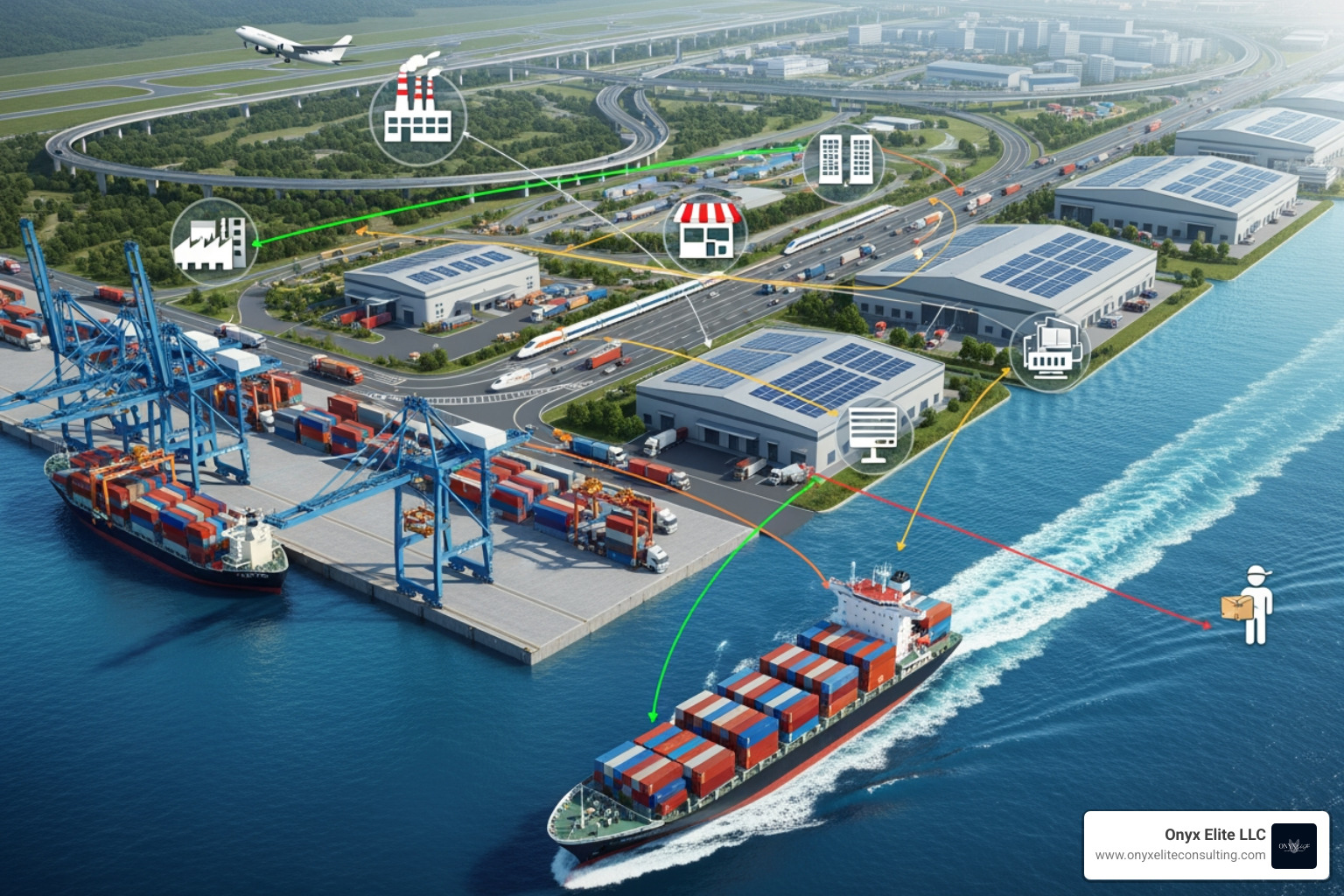
The shift in the competitive landscape demands a more holistic approach. Supply chain performance transcends traditional organizational and company boundaries. It encompasses the entire extended network, from the initial sourcing of raw materials, through various components and subassemblies, to the finished products reaching the end customer. This means that instead of focusing on narrow, company-specific improvements, we must prioritize global supply chain performance improvements. The synergy achieved when all parts of the chain work together, rather than in isolation, is what truly drives competitive advantage.
The Dangers of 'Bad' Performance Measures
The consequences of relying on "bad" performance measures can be surprisingly detrimental. When metrics are poorly chosen or misaligned with overall supply chain objectives, they can create perverse incentives that actively work against the goal of improved supply chain performance.

Consider the tale of Charlie, an operations manager at an aluminum processing facility. His boss, focused solely on a "raw tonnage" metric, berated him for producing fewer tons of low-margin aluminum than budgeted. What the boss failed to see was that Charlie had strategically prioritized high-margin specialty orders, leading to significantly better profitability for the company, even if the sheer volume of aluminum produced was lower. This anecdote perfectly illustrates how misaligned incentives, driven by an inappropriate metric like raw tonnage, can inhibit collaboration and lead to decisions that hurt overall business performance. For a diverse product line where gross margin per ton varies considerably, raw tonnage is an inappropriate measure of supply chain performance.
This kind of scenario is why the use of "bad" metrics can be a major impediment to the implementation of effective integrated supply chain management in today’s highly competitive business environment. As highlighted in The Practice of Supply Chain Management, such metrics can prevent organizations from achieving the seamless, value-added networks necessary for success.
Traditional vs. Integrated Metrics
To truly optimize supply chain performance, we need to move beyond traditional functional metrics that focus on individual departmental efficiency and accept integrated metrics that measure the health and effectiveness of the entire supply chain.
| Traditional Functional Metrics (Focus: Departmental Efficiency) | Integrated Supply Chain Performance Metrics (Focus: End-to-End Value) |
|---|---|
| Cost per unit produced | Total landed cost (including procurement, manufacturing, logistics) |
| Machine uptime/utilization | Perfect Order Rate (delivered complete, on-time, undamaged, with docs) |
| Departmental budget adherence | Cash-to-cash cycle time |
| Raw material inventory holding cost | Inventory turnover (efficiency of inventory utilization) |
| Individual freight cost | On-time delivery to customer |
| Production lead time | Order cycle time (customer order to delivery) |
| Warehouse picking efficiency | Order picking accuracy |
Traditional metrics often lead to optimizing one part of the system at the expense of the whole. For example, a procurement department might achieve low raw material costs by buying in bulk, but this could lead to excessive inventory holding costs and obsolescence issues for the entire supply chain. Integrated metrics, on the other hand, provide a holistic view, ensuring that improvements in one area contribute positively to overall supply chain performance and customer satisfaction.
Key Methods for Measuring Supply Chain Performance
Effective Supply Chain Performance Measurement (SCPM) is the cornerstone of any successful optimization strategy. It's about systematically evaluating the efficiency and effectiveness of all processes involved in getting a product or service from its origin to the end customer. This involves a combination of robust data collection, sophisticated analysis techniques, and the application of proven methodologies.
According to a review of academic literature on SCPM, researchers and practitioners use various methods, approaches, and tools to measure supply chain performance. These often include a mix of qualitative and quantitative assessments. Quantitative measures, which are assessments used to measure, compare, or track performance, can be further divided into non-financial and financial measures.
Defining Your Supply Chain Performance Metrics
When it comes to measuring supply chain performance, selecting the right Key Performance Indicators (KPIs) is paramount. These metrics provide clear, actionable insights into the health and efficiency of your operations. Here are some essential KPIs we recommend tracking:
Perfect Order Rate: This critical metric measures how many orders we ship without errors or deviations. It's a composite of four factors: the delivery must arrive complete, on-time, undamaged, and with proper documentation. The calculation is: (Percent of orders delivered on time) x (Percent of orders complete) x (Percent of orders damage free) x (Percent of orders with accurate documentation) x 100. Data from the American Productivity and Quality Center shows that, at the median, organizations have a perfect order index of 90%. Improving this rate significantly impacts customer satisfaction and reduces costs associated with returns and redeliveries.
On-Time Shipping: This KPI measures the ratio of orders shipped on or before the requested ship date. A high on-time shipping rate indicates an efficient supply chain and is crucial for customer satisfaction. We calculate it as: (Number of On-Time Items / Total Items) x 100.
Order Cycle Time: This measures the average time it takes for a customer to receive a product after placing an order. Shorter order cycle times indicate responsiveness and efficiency. It's calculated as: Actual Ship Date – Customer Order Date. Automating processes in picking and shipping can significantly reduce this time.
Inventory Days on Hand (DOH): This metric indicates the average number of days it takes for a firm to sell off its inventory. A high DOH can signal inefficient inventory management or slow-moving products. It's calculated as: (Average Inventory for the Year / Cost of Goods Sold) x 365. This metric helps us know when it's time to restock and avoid overstocking.
Rate of Return: This measures the percentage of shipped items returned. While some returns are inevitable, a high rate can point to issues in product quality, order accuracy, or customer expectations. It's calculated as: Total Items Returned / Total Items Shipped. The key is to analyze why items are returned to identify underlying supply chain performance problems.
Order Picking Accuracy: This KPI reflects the percentage of orders picked correctly for shipping. Incorrect picks lead to inaccurate inventory, delayed shipments, and unhappy customers. We calculate it as: Total Number of Orders / Perfect Order Rate. According to the 2019 DC Measures annual benchmarking study conducted by the Warehousing Education and Research Council, best-in-class operations achieve more than 99.89% order picking accuracy.
Beyond these specific metrics, methodologies like the SCOR (Supply Chain Operations Reference) Model and the Balanced Scorecard offer comprehensive frameworks for evaluating supply chain performance across various dimensions. They help us understand performance from different angles, including financial, customer, internal business processes, and learning and growth perspectives.
The Impact of Technology on Supply Chain Performance
In today's rapidly evolving business environment, technology is not just an enabler but a transformative force for supply chain performance. Digitalization has fundamentally reshaped how we manage and optimize our supply chains, moving us from reactive problem-solving to proactive, predictive management.
Enterprise Resource Planning (ERP) Systems: ERP systems have long been central to integrating various business functions, including supply chain operations. They provide a unified platform for managing inventory, orders, manufacturing, and financials, enhancing data visibility and streamlining processes. However, as noted in academic research, some ERP systems can be rigid and difficult to modify, highlighting the need for careful selection and implementation.
Internet of Things (IoT): IoT devices are revolutionizing real-time visibility. Sensors on products, vehicles, and warehouse equipment can provide continuous data on location, temperature, condition, and usage. This influx of data allows for immediate insights into potential disruptions, optimized routing, and precise inventory tracking, dramatically improving responsiveness.
Blockchain Technology: Blockchain offers unprecedented transparency and traceability within the supply chain. By creating an immutable, distributed ledger of transactions, it improves trust among partners, reduces fraud, and provides a clear audit trail for every product movement. This is particularly valuable for ensuring product authenticity and regulatory compliance.
Big Data Analytics and AI: The sheer volume of data generated by modern supply chains would be overwhelming without advanced analytics and Artificial Intelligence (AI). AI-driven tools can analyze vast datasets to identify patterns, predict demand fluctuations, optimize routing, and even automate decision-making. High-performing organizations use both foundational analytics (reports, dashboards) and advanced analytics (predictive modeling, machine learning) more broadly than their lower-performing peers, often leveraging existing application vendors rather than stand-alone platforms. This broad adoption of analytics leads to a 10% to 20% reduction in manufacturing, warehousing, and distribution costs.
These technologies collectively enable real-time visibility, allowing us to monitor and react to events as they unfold, rather than days or weeks later. They transform raw data into actionable insights, helping us make informed decisions that drive efficiency, reduce costs, and improve customer satisfaction.
At Onyx Elite Consulting, we understand the power of these technologies and how to strategically implement them to lift your supply chain performance. More info about our strategic services can be found on our website.
Strategies for Continuous Improvement and Resilience
The modern supply chain operates in an environment characterized by increasing instability, disruption, and rising costs. To not only survive but thrive, continuous improvement and resilience are non-negotiable. Our goal is to create supply chains that are not just efficient but also agile enough to adapt to unforeseen challenges and resilient enough to bounce back quickly.
We achieve this by embedding lean principles and agile methodologies throughout the supply chain. This means relentlessly eliminating waste in all its forms—from minimizing useless resource activities and unsatisfactory delivery times to eradicating noncompliant quality and overproduction. For example, improving demand forecasting can lead to fewer missed sales, higher fill rates, and reduced waste and spoilage, as it allows for optimized production schedules and lower working capital.
Building resilient networks involves a multi-pronged approach:
- Proactive Risk Management: We develop strong crisis response capabilities and conduct comprehensive scenario planning to identify and mitigate potential disruptions, whether they stem from geopolitical events, economic shifts, or natural disasters.
- Strategic Redundancy: This might involve dual sourcing for critical components or establishing buffer inventories at strategic points to absorb shocks.
- Regionalization: Considering near-shoring or regional partnerships can reduce reliance on vulnerable global routes and shorten lead times, making the supply chain more responsive.
- Digitalization: Leveraging technology for increased visibility and predictive analytics allows us to anticipate and react to disruptions more effectively.
Continuous improvement in supply chain performance is about fostering a dynamic system that constantly seeks better ways to deliver value, while simultaneously building the shock absorbers necessary to withstand the inevitable bumps in the road.
Fostering a Culture of Improvement
Achieving effective supply chain performance isn't just about implementing new tools or processes; it's fundamentally about people and culture. To win in today's environment, supply chains need continuous improvement, and that starts with cultivating a culture that accepts change, collaboration, and learning.
Leadership Commitment: Leadership must champion the importance of an optimized supply chain. This means clearly articulating why cost savings and efficiency measures are vital, not just for the bottom line but for sustainable growth and competitiveness. When leadership consistently communicates about the importance of cost savings, sets clear metrics, and tracks performance, employees understand expectations and see the value of their contributions.
Supplier Collaboration: Strong, collaborative relationships with suppliers are paramount. This involves more than just transactional exchanges; it means sharing demand forecasts, investing in supplier development, and even implementing risk-sharing agreements. Nurturing these relationships speeds up procurement, ensures cost-effectiveness, and provides better visibility into potential changes or disruptions.
Information Sharing: Breaking down information silos is crucial. When all stakeholders across the extended supply chain have access to relevant data and insights, it enables better coordination and quicker, more informed decision-making. This transparency fosters trust and allows for a more integrated approach to problem-solving and optimization.
By embedding a cost-aware culture, promoting strong supplier partnerships, and facilitating open information exchange, we empower every individual and partner in the supply chain to contribute to its continuous improvement. This collective effort is what ultimately drives superior supply chain performance and ensures long-term success.
For more insights into creating a resilient and continuously improving organization, Read our Blogs & Insights.
Frequently Asked Questions about Optimizing Supply Chains
We often encounter common questions from organizations looking to improve their supply chain performance. Here are some of the most frequent ones:
What is the difference between supply chain performance and logistics?
While often used interchangeably, supply chain performance is a much broader concept than logistics. Logistics primarily focuses on the efficient flow and storage of goods, services, and related information within a single organization or between specific points. It deals with activities like transportation, warehousing, inventory management, and order fulfillment.
Supply chain performance, on the other hand, refers to the overall effectiveness of the entire extended network in meeting end-customer requirements. It encompasses all activities from raw material sourcing to final delivery, crossing company boundaries and integrating strategic planning, supplier relationships, manufacturing, distribution, and customer service. Logistics is a critical component that contributes to overall supply chain performance, but it's not the whole picture. Think of logistics as the engine and supply chain performance as the entire vehicle's ability to reach its destination efficiently and effectively.
What is the first step to improving supply chain performance?
The very first step to improving supply chain performance is to gain clarity on your current state and define what success looks like. This means:
- Articulating Business Aspirations: Clearly define your overall business goals and how improved supply chain performance will contribute to them. What are you trying to achieve? (e.g., reduce costs, improve customer satisfaction, increase market share).
- Establishing Key Performance Indicators (KPIs): Once goals are clear, identify and establish the right set of KPIs to measure and monitor the supply chain performance. As we've discussed, these should be integrated metrics that reflect end-to-end value, not just isolated departmental efficiencies. You can't improve what you don't measure.
Without these foundational steps, any improvement efforts risk being misdirected or failing to deliver tangible results.
How often should I review my supply chain KPIs?
The frequency of reviewing your supply chain performance KPIs depends on the nature of the metric and your operational needs.
- Operational KPIs (e.g., perfect order rate, on-time shipping, order cycle time): These should be monitored frequently, often daily or weekly. This allows for quick identification of issues, real-time adjustments, and agile problem-solving. Some organizations even implement a weekly meeting cadence specifically for monitoring critical operational KPIs.
- Tactical KPIs (e.g., inventory days on hand, supplier performance): A monthly or quarterly review is typically sufficient for these metrics. They provide a slightly longer-term view and inform tactical adjustments to inventory policies or supplier engagement strategies.
- Strategic KPIs (e.g., cash-to-cash cycle time, overall supply chain costs): These broader, strategic indicators might be reviewed quarterly or annually, often as part of strategic planning sessions. They help assess the overall health and competitiveness of the supply chain and inform major investment decisions.
For benchmarking purposes, external data collection often occurs annually, as seen with studies like Gartner's IDN supply chain benchmarking. The key is continuous monitoring and periodic, structured reviews to ensure that your supply chain performance remains aligned with your business objectives.
Conclusion: Building a Future-Proof Supply Chain for Lasting Success
In an increasingly volatile and competitive world, optimizing supply chain performance is no longer a luxury—it's a fundamental requirement for enterprise growth and survival. We've explored how the battlefield has shifted from individual company performance to the integrated, end-to-end efficiency of the entire supply chain. The dangers of "bad" metrics, which lead to misaligned incentives and hinder collaboration, underscore the critical need for a holistic approach to measurement. By moving from siloed functional metrics to integrated KPIs like Perfect Order Rate and Cash-to-Cash Cycle Time, we gain a true understanding of our supply chain's health.
Technology, from ERP systems and IoT to blockchain and AI-driven analytics, acts as a powerful enabler, providing real-time visibility and predictive insights that transform how we manage and optimize. Coupled with strategies for continuous improvement, lean principles, and the deliberate construction of resilient networks, we can build supply chains that are both efficient and agile. Fostering a culture of improvement, championed by leadership and built on strong supplier collaboration and transparent information sharing, is what sustains long-term supply chain performance.
At Onyx Elite Consulting, we understand these complexities. Our mission is to help organizations like yours in Connecticut and beyond achieve sustainable growth and operational excellence by changing your supply chain performance. By implementing strategic planning, leveraging cutting-edge technology, and fostering a culture of continuous improvement, we empower you to not only meet but exceed the demands of today's dynamic market.
Don't let outdated approaches hold you back. Explore our comprehensive services to optimize your operations and build a future-proof supply chain that drives lasting success.